


What's Happening?
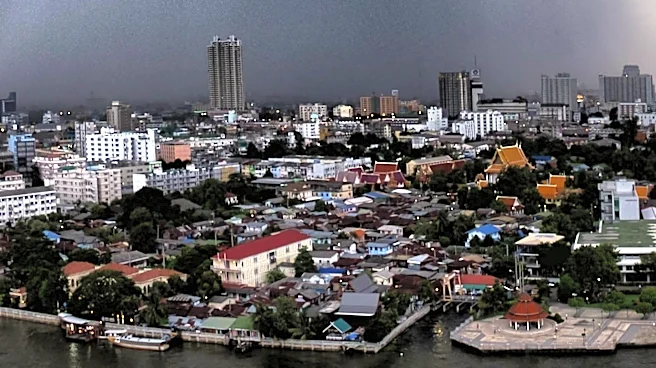
A recent study has highlighted the complex relationship between urban landscapes and storm patterns, focusing on four Texas cities. The research, led by Xinxin Sui from the Colorado School of Mines, analyzed 40,000 storms over 23 years using high-resolution
radar data. The findings indicate that urban areas can both intensify and weaken storms. Short-lived, localized storms are more frequent in cities, especially at night and on weekdays, due to urban heat and air pollution. Conversely, cold-front storms weaken over cities as buildings disrupt the temperature dynamics necessary for storm formation. The study aims to improve rainfall predictions in urban areas, particularly for extreme weather events.
Why It's Important?
Understanding how urban environments influence storm behavior is crucial for urban planning and disaster preparedness. As cities continue to grow, the ability to predict and manage storm impacts becomes increasingly important. The study's insights could lead to better flood management strategies, reducing the risk of damage and loss of life in urban areas. Additionally, as climate change exacerbates weather extremes, cities must adapt their infrastructure to mitigate these effects. The research underscores the need for integrating storm dynamics into urban climate models to enhance resilience against future flood hazards.
What's Next?
The study suggests incorporating storm type data into urban climate models to improve flood hazard anticipation. This could lead to the development of more resilient urban infrastructures. Policymakers and urban planners may need to consider these findings when designing city landscapes and infrastructure to better manage stormwater and reduce flood risks. Further research could explore the specific mechanisms by which urban environments alter storm structures, potentially leading to innovative solutions for urban storm management.