







What's Happening?
A recent study published in Nature suggests that a global shift towards healthier eating habits, increased agricultural productivity, and a 50% reduction in food waste could significantly reshape agriculture worldwide by 2050. The study estimates that these
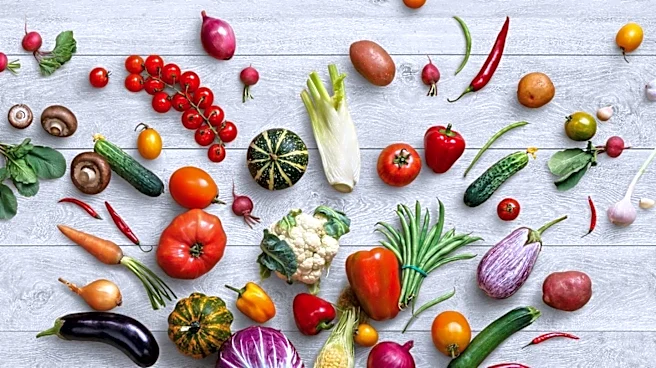
changes could reduce global farmland by nearly 6%, an area approximately the size of India, and decrease the value of livestock production by 42%, or about $630 billion. The adoption of the EAT-Lancet Commission's dietary recommendations would lead to reduced meat consumption and increased production of fruits, vegetables, legumes, and nuts. This shift would decrease the need for feed crops like corn and soy, allowing for the repurposing of grazing lands. Additionally, agricultural greenhouse gas emissions could decline by about one-third, with reductions in water consumption and fertilizer use providing further environmental benefits.
Why It's Important?
The proposed changes in global agriculture could have profound impacts on environmental sustainability and food security. By reducing the demand for meat and increasing the production of plant-based foods, the agricultural sector could significantly lower its carbon footprint and resource consumption. This transformation could also lead to healthier populations by promoting diets rich in fruits and vegetables. However, the transition poses challenges, including potential economic losses for farmers and ranchers reliant on livestock production. Policymakers, industry leaders, and consumers must collaborate to create incentives and support systems to facilitate this shift, ensuring that the benefits are equitably distributed and that the agricultural sector remains viable.