






What's Happening?
Hong Kong customs officials recently seized approximately 330 pounds of dried fish bladders, known as fish maw, valued at over $3 million. The contraband was concealed within a shipment of frozen fish fillets traveling from Mexico to Vietnam. Authorities
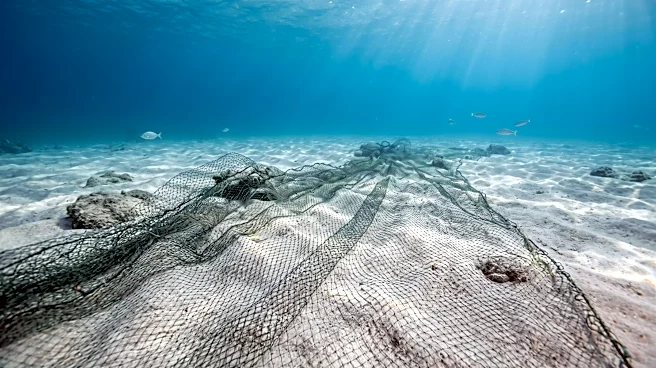
suspect the seized bladders originated from the totoaba, a critically endangered fish native to the Gulf of California, whose swim bladder commands extremely high prices on the black market. This seizure has brought renewed attention to the escalating pressure on endangered marine species due to the booming trade in fish maw. Experts indicate that the trade is far more extensive and ecologically damaging than commonly perceived, with many species now facing conservation concerns. Gillnets used to catch fish for their maws also inadvertently trap and kill other marine life, including sea turtles, sharks, rays, and the critically endangered vaquita.
Why It's Important?
This seizure underscores the significant global challenge of illicit wildlife trade, which has profound implications for marine biodiversity and international conservation efforts. For the U.S., the involvement of a critically endangered species from the Gulf of California highlights the transnational nature of these criminal networks and the direct threat they pose to species within U.S. and neighboring waters. The high value of fish maw drives unsustainable fishing practices, leading to the depletion of marine populations and disrupting delicate ocean ecosystems. This illicit trade also undermines legitimate fishing industries and conservation initiatives, creating an uneven playing field and potentially funding organized crime. The call for a fish maw-specific World Customs Organization code, increased law enforcement training, and stronger national laws reflects the urgent need for a coordinated international response to protect vulnerable marine species and ensure the sustainability of global fisheries.
What's Next?
Researchers and non-profit organizations are advocating for tighter international oversight, particularly through the Convention on International Trade in Endangered Species (CITES). Following calls for a dedicated fish-maw working group and its inclusion as a standing agenda item, CITES' Animals Committee considered potential next steps in July. Countries heavily involved in fish maw fishing are being urged to identify targeted species, document their conservation status, and map trade routes. TRAFFIC, a wildlife trade monitoring network, has specifically requested a fish maw-specific World Customs Organization code, alongside more law enforcement training and stronger national laws to combat this illicit trade. The ongoing efforts will likely focus on enhancing international cooperation, improving data collection on species and trade routes, and strengthening regulatory frameworks to better manage and ultimately curb the trade in endangered fish maw.
Beyond the Headlines
The illicit trade in fish maw reveals deeper ethical and cultural dimensions surrounding the consumption of exotic and endangered species. The demand for fish maw, particularly in Southern China where it is considered a delicacy with perceived health and beauty benefits, highlights the complex interplay between cultural traditions, economic value, and conservation ethics. This incident also brings to light the 'luxury paradox,' where the rarity and high price of an endangered species can paradoxically increase its desirability and drive further exploitation. The comparison to the early days of the shark fin trade suggests a potential for similar devastating ecological consequences if not addressed effectively. Addressing this issue requires not only stricter enforcement but also public awareness campaigns to shift consumer behavior and promote sustainable alternatives, challenging long-held cultural practices in favor of global ecological responsibility. The long-term implications involve a re-evaluation of how societies value and interact with marine resources.