


What's Happening?
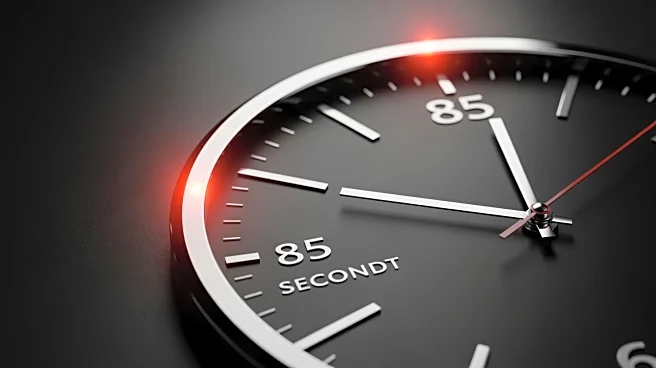
The Bulletin of the Atomic Scientists has announced that the Doomsday Clock is now set at 85 seconds to midnight, the closest it has ever been to the symbolic point of global catastrophe. This decision reflects the organization's assessment of increased
risks from nuclear threats, climate change, and disruptive technologies such as artificial intelligence. The clock, established in 1947, serves as a metaphor for humanity's proximity to self-destruction. The adjustment was influenced by insufficient progress in addressing these existential threats, as well as the spread of misinformation and disinformation. The announcement was made during a news briefing, highlighting the urgent need for international cooperation and action.
Why It's Important?
The new setting of the Doomsday Clock highlights the critical need for global action to address the existential threats facing humanity. The closer proximity to midnight signifies heightened risks from nuclear proliferation, climate change, and technological advancements that could destabilize societies. This symbolic move serves as a call to action for governments, organizations, and individuals to prioritize international cooperation and effective policy-making to mitigate these threats. The decision underscores the importance of addressing misinformation, which exacerbates these challenges. The clock's setting acts as a stark reminder of the precarious state of global security and the need for immediate action.
What's Next?
The Bulletin of the Atomic Scientists emphasizes the need for international cooperation to address the existential risks highlighted by the Doomsday Clock. With the expiration of the last remaining nuclear arms treaty between the US and Russia on the horizon, there is an urgent need for diplomatic efforts to prevent a nuclear arms race. Additionally, the rapid development of artificial intelligence and other disruptive technologies requires regulatory frameworks to prevent misuse. The organization calls for increased public awareness and engagement to pressure leaders into taking decisive actions. The clock's setting serves as a catalyst for discussions on global security and the steps necessary to turn back the metaphorical clock.