





What's Happening?
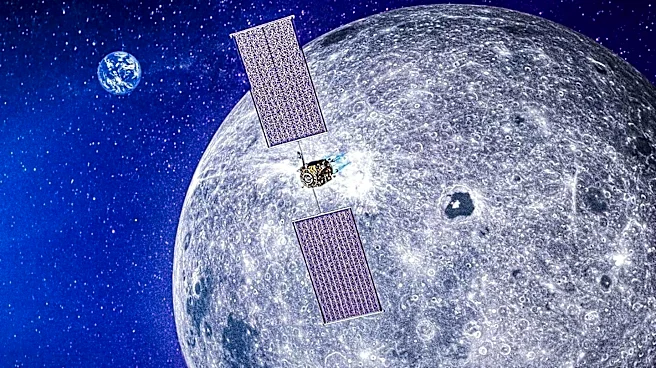
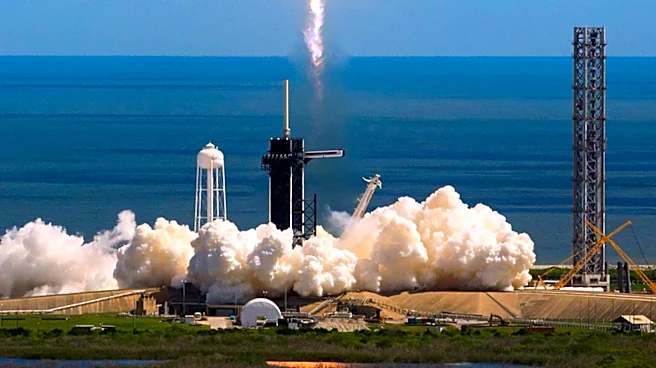
A South Korean satellite, Danuri, has captured images of the moon's surface before and after a SpaceX Falcon 9 rocket's upper stage crashed into it. The collision occurred on August 5, 2026, when the rocket, launched in January 2025, inadvertently hit
the moon due to solar activity and gravitational forces. The impact site, now darker and marked by a crater, was photographed by Danuri, which made multiple passes over the area. NASA plans to use its Lunar Reconnaissance Orbiter to further investigate the crash site. The incident highlights the challenges of space debris management and the potential risks of uncontrolled rocket stages.
Why It's Important?
The crash underscores the growing issue of space debris and the need for effective management strategies as space exploration activities increase. Uncontrolled rocket stages pose risks to both lunar and orbital environments, potentially impacting future missions and satellite operations. The incident also raises questions about the responsibilities of private space companies in managing debris and ensuring safe operations. As more private entities engage in space exploration, international cooperation and regulatory frameworks may be necessary to address these challenges and promote sustainable space activities.
What's Next?
NASA's upcoming investigation of the crash site will provide valuable data on the impact's effects and contribute to understanding lunar surface dynamics. The findings could inform future mission planning and debris mitigation strategies. SpaceX and other private space companies may need to enhance their debris management practices to prevent similar incidents. The international space community may also consider developing guidelines and agreements to address the growing issue of space debris and ensure the safety of future missions.