






What's Happening?
The Democratic Republic of Congo is facing a severe Ebola outbreak, with over 130 deaths and nearly 600 suspected cases reported. The World Health Organization (WHO) has declared the outbreak a public health emergency of international concern. The virus,
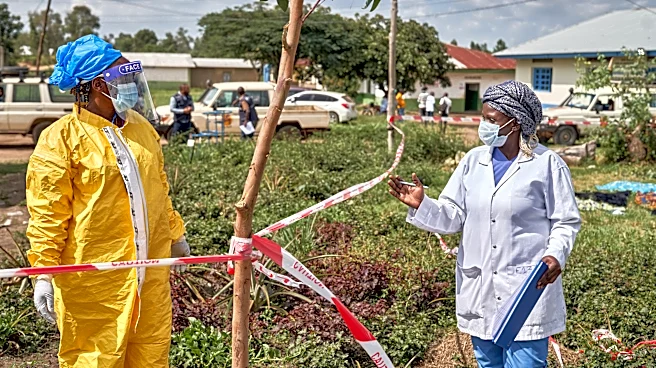
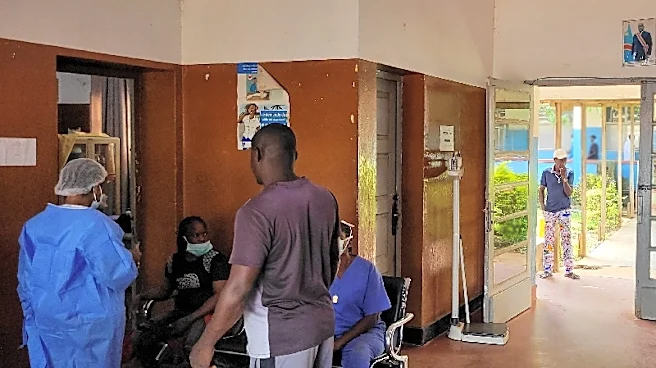
identified as the Bundibugyo strain, has no available vaccines or treatments, complicating efforts to contain its spread. The outbreak is believed to have started in the Mongbwalu mining area and has spread to other regions. Health officials are working to control the situation through community engagement, clinical care, and infection control measures.
Why It's Important?
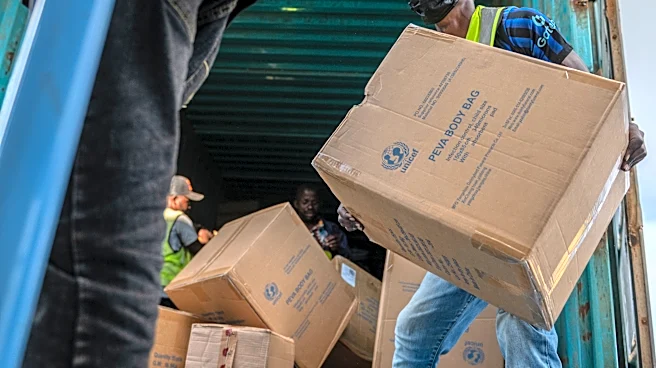
The outbreak poses a significant threat to public health in the region and highlights the challenges of managing infectious diseases in conflict-ridden areas. The lack of vaccines and treatments for the Bundibugyo strain underscores the need for accelerated research and development of medical countermeasures. The situation also raises concerns about the potential for the virus to spread beyond the region, prompting enhanced public health screening and traveler monitoring in the U.S. and other countries. The outbreak's impact on local communities and healthcare systems is profound, with significant resources required to manage and contain the virus.
What's Next?
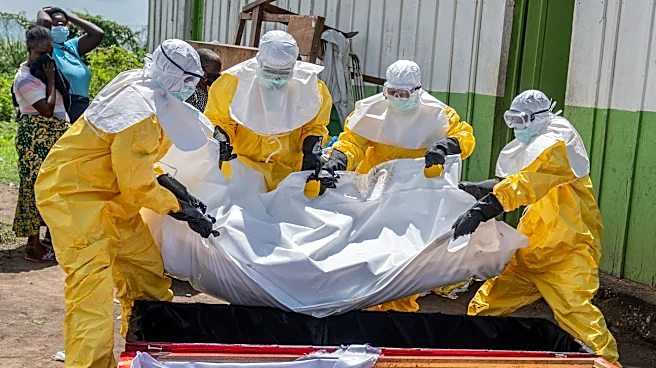
Efforts to contain the outbreak will continue, with the WHO and local health authorities focusing on contact tracing, safe burial practices, and community education. Research into vaccines and treatments for the Bundibugyo strain is being prioritized, with potential candidates in development. The international community is likely to increase support for affected regions, providing resources and expertise to help manage the crisis. Monitoring and screening measures will remain in place to prevent the virus from spreading to other countries.