









What's Happening?
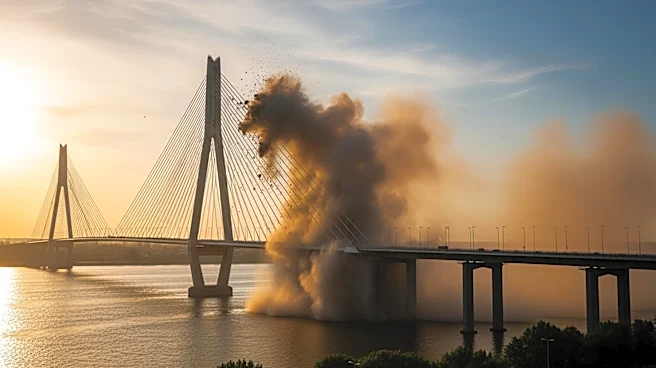
Ukrainian forces have intensified their drone strike campaign against Russian logistics routes, particularly targeting the Chonhar Bridge in Russian-occupied Kherson Oblast. This bridge, part of the R-280 'Novorossiya' highway, is a critical supply line
connecting Rostov-on-Don in Russia with Crimea. The recent strike, involving Ukrainian FP-2 and Behemot drones, marks the second attack on the bridge within three days, temporarily halting traffic and forcing reroutes through other settlements in Crimea. Ukrainian military operations have reportedly reduced Russian military cargo traffic along this route by 71% over the past two weeks, significantly impacting Russian supply capabilities.
Why It's Important?
The disruption of the Chonhar Bridge and other logistics routes is a strategic move by Ukraine to weaken Russian military operations in the region. By targeting key supply lines, Ukraine aims to hinder the flow of military supplies and fuel to Russian forces, potentially affecting their operational effectiveness. This strategy not only impacts the immediate military logistics but also has broader implications for the ongoing conflict, as it may force Russia to reconsider its supply chain strategies and logistics planning. The reduction in cargo traffic highlights the effectiveness of Ukraine's drone operations in exerting pressure on Russian military infrastructure.
What's Next?
As Ukraine continues its middle-strike campaign, further disruptions to Russian logistics routes are likely. This could lead to increased military engagements as Russia attempts to secure its supply lines. Additionally, the ongoing strikes may prompt Russia to enhance its air defense systems or seek alternative routes to maintain its military operations. The international community will be closely monitoring these developments, as they could influence diplomatic efforts and negotiations related to the conflict.