
What's Happening?
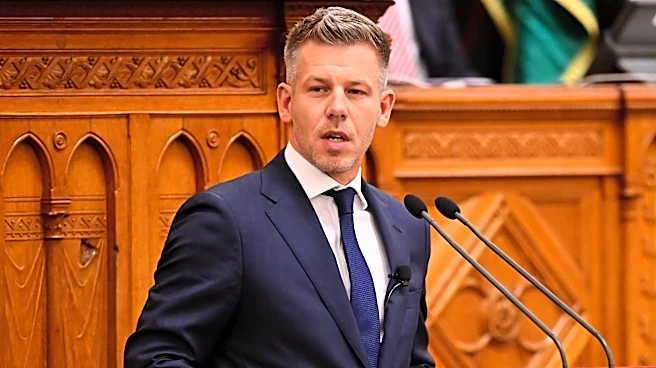
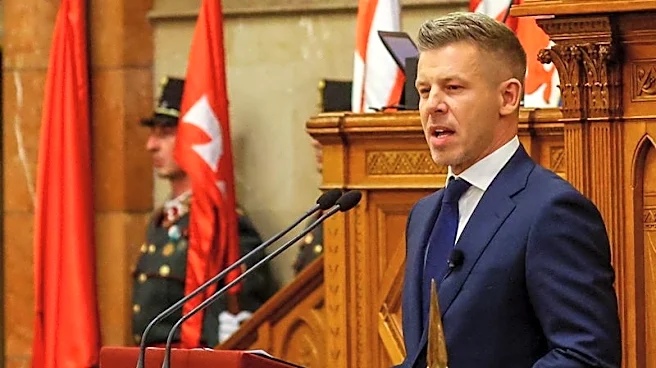
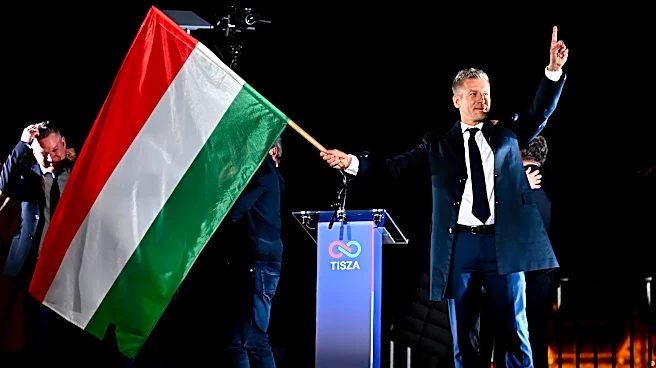
Peter Magyar has been inaugurated as Hungary's new prime minister, succeeding Viktor Orban after a 16-year tenure. Magyar, leading the center-right Tisza party, secured a significant parliamentary majority
in recent elections. His leadership marks a shift from Orban's policies, particularly in relation to the European Union. Under Orban, Hungary's ties with the EU weakened, with increased alignment with Moscow. Magyar's administration aims to restore relations with the EU and unlock approximately $20 billion in frozen funds, previously withheld due to concerns over human rights and rule of law under Orban. The reinstatement of the EU flag in Hungary's parliament symbolizes a renewed commitment to European integration.
Why It's Important?
Magyar's leadership represents a potential pivot in Hungary's domestic and foreign policy, particularly concerning its relationship with the European Union. The unlocking of EU funds could significantly impact Hungary's economy, which has faced stagnation. Magyar's approach to governance will be closely watched, as he seeks to differentiate himself from Orban's legacy while addressing the bureaucratic challenges left by the previous administration. His success in these areas could influence Hungary's political landscape and its role within the EU, potentially affecting regional stability and economic cooperation.
What's Next?
Magyar's immediate challenges include negotiating with the EU to release the frozen funds and addressing Hungary's budget deficit. His administration will need to navigate the complexities of dismantling Orban's entrenched bureaucratic structures while establishing new diplomatic ties within the EU. The effectiveness of these efforts will be crucial in determining Hungary's future economic and political trajectory. Observers will be keen to see how Magyar balances domestic reforms with international diplomacy, particularly in light of Hungary's previous alignment with Russia.