

What's Happening?
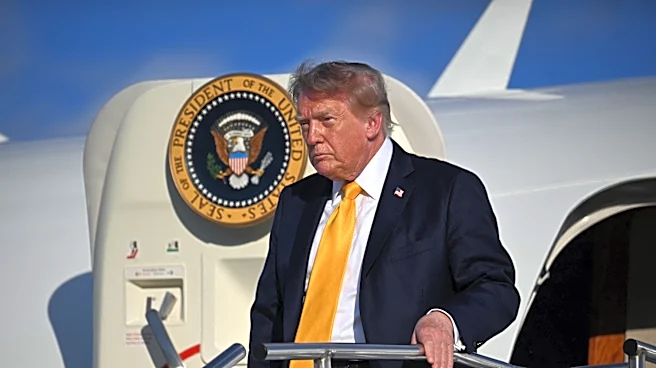
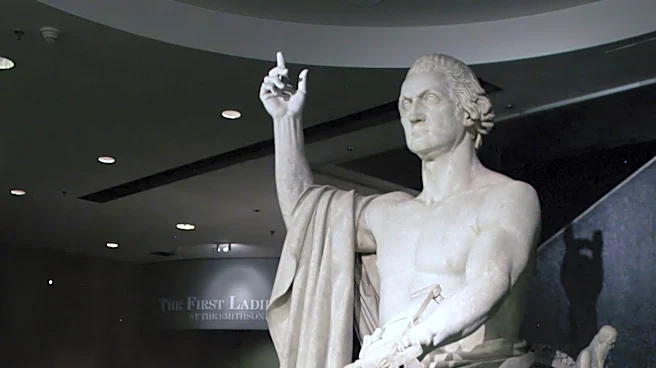
President Trump's administration has issued a 162-page report titled 'Saving America’s Story: How Ideological Capture at the Smithsonian Institution’s National Museum of American History Erases Our Heritage.' The report criticizes the National Museum of American History,
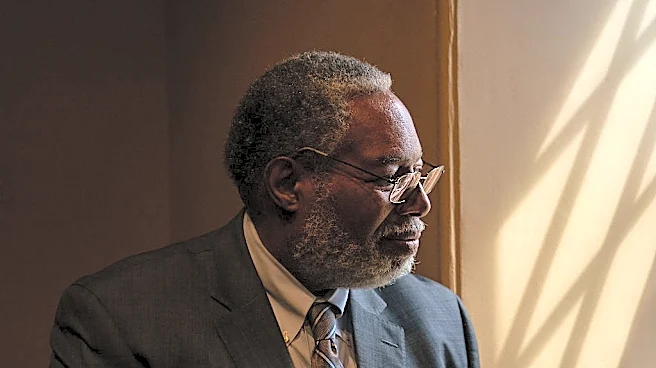
specifically targeting its director, Lonnie Bunch III, for allegedly shifting the museum's focus from traditional historical education to 'extreme political activism.' According to the report, the museum's exhibitions emphasize themes of regret, tragedy, and shame in American history, rather than celebrating the nation's 'victory of freedom and genius.' President Trump has also demanded that the museum post signs warning visitors about 'inaccurate information' presented within its exhibits, reflecting a desire for a more 'sanitized' version of American history that avoids references to prejudice, discrimination, human rights abuses, and political corruption.
Why It's Important?
This development is significant as it represents a direct challenge from the executive branch to the curatorial independence of a major U.S. cultural institution. The Smithsonian Institution, established in 1846, operates as a semi-independent entity, and attempts to influence its narrative raise questions about academic freedom and the interpretation of history in public spaces. The administration's critique underscores a broader national debate about how American history, particularly its more controversial aspects like slavery and the treatment of Indigenous peoples, should be presented to the public. This dispute could impact funding for the Smithsonian, as the White House can influence congressional budget allocations. It also highlights the politicization of historical narratives, potentially affecting how future generations understand the nation's past and the role of museums in shaping that understanding.
What's Next?
Lonnie Bunch III, the head of the Smithsonian, has publicly stated that the institution's mission is to present the complexity of the nation through 'best non-partisan scholarship.' It is expected that the Smithsonian will continue to defend its curatorial decisions and academic independence. While President Trump has demanded warning signs, the executive branch does not have direct control over the Smithsonian's operations, though it can influence its budget through Congress. This situation may lead to ongoing public debate and potential legislative actions regarding the funding and oversight of national museums. Historians and museum officials are likely to continue to criticize what they view as an attempt to impose a revisionist and ideologically driven interpretation of history. The outcome could set a precedent for the autonomy of cultural institutions in the face of political pressure.
Beyond the Headlines
This controversy delves into the fundamental role of historical institutions in a democratic society. The administration's push for a 'sanitized' history, devoid of critical examination of past injustices, raises concerns about censorship and the suppression of uncomfortable truths. It echoes historical instances where authoritarian regimes have manipulated historical narratives to serve political agendas, as noted by critics comparing this approach to those of Josef Stalin and Adolf Hitler. The debate highlights the tension between national pride and a comprehensive, nuanced understanding of history, including its darker chapters. The long-term implications could include a chilling effect on academic freedom within public institutions, a deepening of cultural divides over historical memory, and a re-evaluation of how public funds are allocated to institutions that challenge dominant narratives. It underscores the ongoing struggle to reconcile America's ideals with its complex historical realities.