







What's Happening?
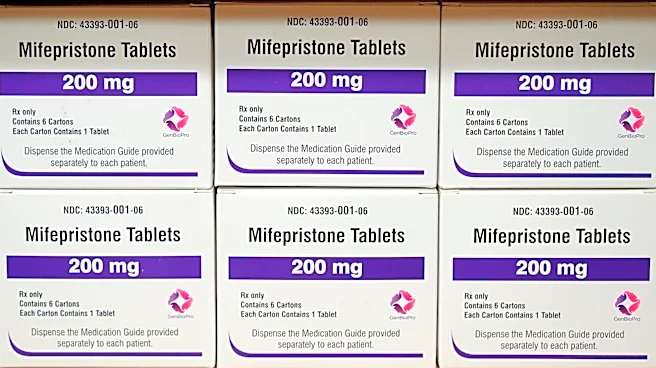
The U.S. Supreme Court has temporarily upheld the nationwide access to mail-order mifepristone, a key abortion medication, amidst ongoing legal challenges. This decision comes as several lawsuits, including one from Louisiana against the FDA, aim to restrict
access to mifepristone. The ruling allows providers in states where abortion is legal to continue prescribing and mailing the medication across state lines. The decision counters Justice Samuel Alito's concerns about states undermining the Dobbs decision by facilitating access to medication abortion in states where it's banned. The FDA is currently reviewing mifepristone, following recent leadership changes within the agency. The legal landscape remains uncertain, with the Louisiana case expected to return to the Supreme Court in the future.
Why It's Important?
The Supreme Court's decision to maintain access to mifepristone is significant as it impacts reproductive healthcare across the U.S. The ruling ensures that women in states with legal abortion can still access medication abortion, which is crucial for those unable to travel for in-person care. This decision also highlights the ongoing national divide over abortion rights, with potential implications for pharmaceutical regulations. The outcome of these legal challenges could set precedents affecting the availability of abortion medications and the broader pharmaceutical industry. The decision underscores the tension between state and federal regulations on reproductive health, with potential ripple effects on healthcare access and legal frameworks.
What's Next?
The legal battle over mifepristone is expected to continue, with the Louisiana case likely to return to the Supreme Court. Providers and advocates are preparing for potential disruptions in access to abortion medications. The FDA's ongoing review of mifepristone and recent leadership changes may influence future regulatory decisions. Meanwhile, states with restrictive abortion laws may continue to challenge federal regulations, potentially leading to further legal confrontations. The outcome of these cases could impact the availability of reproductive healthcare and set legal precedents for state versus federal authority in regulating medications.
Beyond the Headlines
The ongoing legal challenges to mifepristone access highlight broader ethical and legal questions about reproductive rights and state versus federal authority. The case underscores the complexities of balancing individual rights with state regulations, particularly in the context of healthcare. The decision also raises concerns about the potential criminalization of healthcare providers and the impact on patient care. The legal uncertainty creates challenges for providers and patients, emphasizing the need for clear and consistent regulations. The case may also influence public opinion and political discourse on reproductive rights and healthcare access.