



What's Happening?
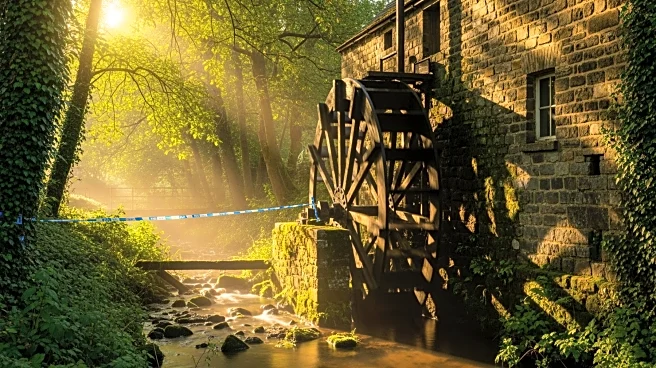
The Rossett Mill, a 450-year-old watermill in Wrexham, Wales, has been put on the market. This historic site, which inspired a painting by the renowned artist J.M.W. Turner, is now available for purchase at £1.5 million ($2.05 million). The mill, originally
constructed in 1588, has undergone significant restoration to preserve its historical features while incorporating modern amenities. The property includes a four-bedroom residence with central heating and an electric gated driveway, alongside traditional elements like exposed oak beams and stonework. The mill's corn milling function has also been restored, allowing it to operate as it did centuries ago. The current owners, Celia and Branden Wilson, have made the mill a livable space, adding features such as bay windows and a rustic kitchen. The property also retains its historical water rights from the River Alyn, essential for its milling operations.
Why It's Important?
The sale of Rossett Mill highlights the ongoing interest in preserving historical sites and their cultural significance. As a subject of Turner's artwork, the mill represents a tangible connection to the past, offering insights into the architectural and industrial history of the region. The property's restoration and continued use as a working mill underscore the value of maintaining historical structures for educational and cultural enrichment. This sale could attract buyers interested in heritage conservation, potentially influencing the market for similar historical properties. Additionally, the mill's operation as a functional site provides a unique opportunity for sustainable tourism and educational programs, benefiting the local economy and community.
What's Next?
The future of Rossett Mill will depend on the interests and intentions of its new owners. Potential buyers may continue to operate the mill as a historical site, possibly expanding its role in local tourism and education. The property's unique blend of historical significance and modern livability could attract interest from conservationists and those seeking a distinctive residence. The sale may also prompt discussions on the preservation of other historical sites, encouraging investment in heritage properties. Local authorities and heritage organizations might engage with the new owners to ensure the mill's historical integrity is maintained while exploring opportunities for public engagement and education.