


What's Happening?
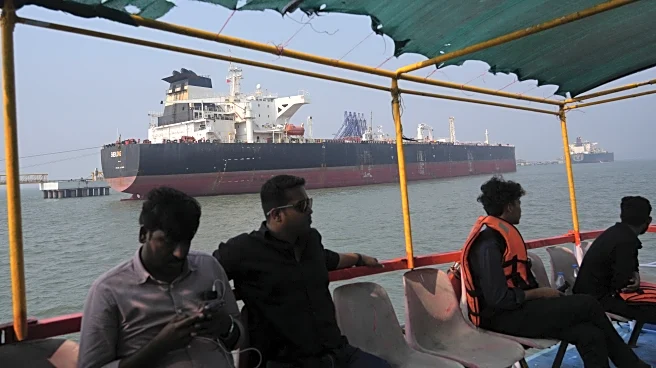
The global oil market is experiencing significant turmoil due to the ongoing conflict in the Strait of Hormuz, which has severely disrupted oil exports. This has led to a record amount of oil being stranded, with military strikes damaging key infrastructure
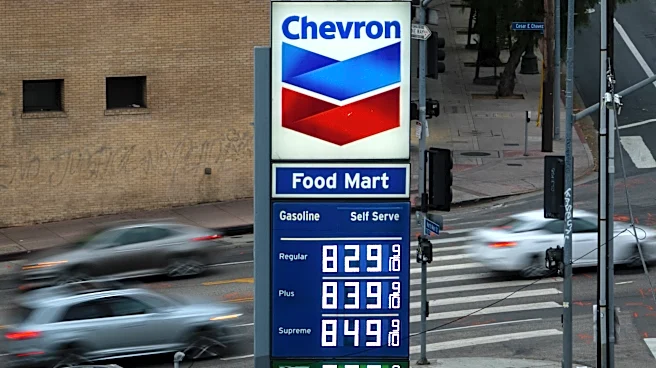
such as refineries and pipelines. In response, President Trump and other world leaders have taken measures to mitigate the impact, including releasing emergency oil reserves and lifting certain sanctions. Despite these efforts, oil prices have surged past $100 per barrel, and gasoline prices in the U.S. have reached an average of $4.06 per gallon. The International Energy Agency (IEA) has highlighted the critical need to resume oil transit through the Strait of Hormuz to stabilize the market.
Why It's Important?
The disruption in oil supply has far-reaching implications for the global economy, particularly affecting energy prices and economic stability. The U.S., despite being a major oil producer, cannot quickly ramp up production to fill the gap, highlighting the limitations of domestic production in addressing global shortages. The situation underscores the vulnerability of global oil markets to geopolitical conflicts and the interconnected nature of energy supply chains. The rising prices are likely to impact consumers and industries reliant on oil, potentially leading to increased costs and inflationary pressures.
What's Next?
The resolution of the conflict in the Strait of Hormuz is crucial for restoring stability to the oil market. In the meantime, countries may continue to explore alternative routes and strategies to alleviate the supply crunch. The U.S. and other nations might consider further strategic releases of oil reserves or diplomatic efforts to de-escalate tensions in the region. The ongoing situation could prompt a reevaluation of energy policies and a push towards diversifying energy sources to reduce dependency on volatile regions.