








What's Happening?
The U.S. Forest Service has announced that it will not issue commercial huckleberry harvest permits for 2026 in the Gifford Pinchot National Forest, Washington. This decision follows a similar restriction implemented last year and is part of a broader
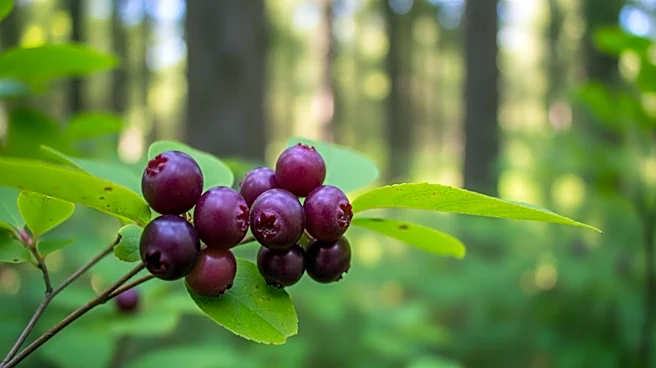
effort to protect huckleberry habitats. Forest Supervisor Johanna Kovarik emphasized the importance of honoring treaty-reserved rights and ensuring the ecological health of these areas. The decision was made after extensive consultations with tribal nations, including the Yakama Nation, Tulalip Tribes, and the Affiliated Tribes of Northwest Indians, who have requested a permanent cessation of commercial harvesting. The initiative aims to address the decline of huckleberry stands due to factors like conifer encroachment, fire suppression, drought, and invasive species. While commercial harvesting is restricted, personal-use permits will still be available, allowing individuals to collect limited quantities of huckleberries.
Why It's Important?
This decision underscores the U.S. Forest Service's commitment to balancing ecological preservation with cultural respect. By limiting commercial huckleberry harvests, the Forest Service aims to protect a vital cultural resource for indigenous tribes, who have historically relied on these plants. The move also highlights the agency's response to environmental challenges such as habitat degradation and climate change impacts. This action could set a precedent for how natural resources are managed in collaboration with indigenous communities, potentially influencing future policies on resource management and conservation. The restriction may impact local economies dependent on commercial harvesting, but it prioritizes long-term ecological sustainability and cultural heritage.
What's Next?
The Forest Service will continue to evaluate long-term management strategies for the Gifford Pinchot National Forest. This includes ongoing consultations with tribal nations and other stakeholders to develop sustainable practices that protect huckleberry habitats. The agency may explore additional measures to mitigate the environmental factors contributing to the decline of these plants. Future decisions will likely consider the balance between ecological health and economic interests, with potential adjustments to personal-use permit regulations based on environmental assessments. The outcome of these efforts could influence broader conservation strategies across national forests.