






What's Happening?
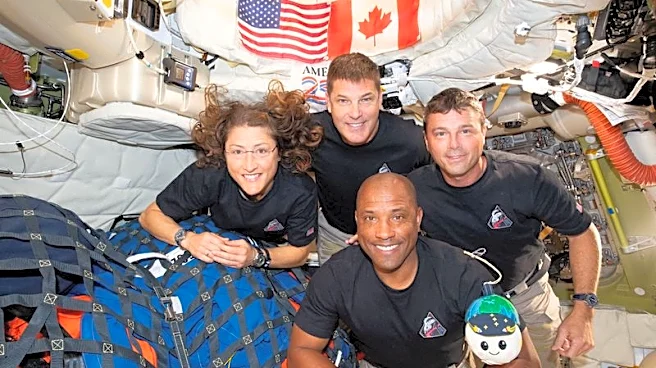
The Artemis II crew is preparing to return to Earth after a historic mission that saw them travel farther into space than any human before. The crew, consisting of Commander Reid Wiseman, pilot Victor Glover, mission specialist Christina Koch, and Canadian
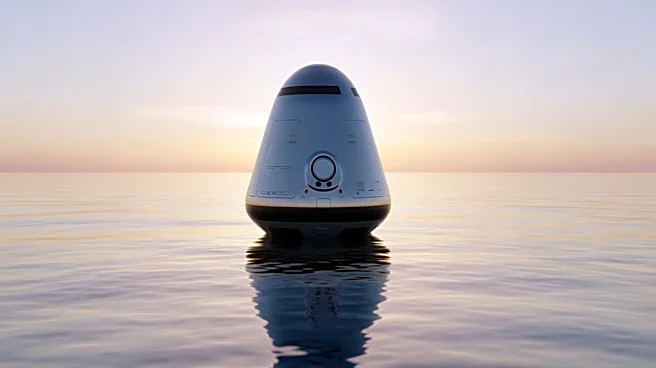
astronaut Jeremy Hansen, reached 248,655 miles from Earth, surpassing Apollo 13's record. The U.S. Navy is ready to recover the crew as they splash down in the Pacific Ocean near San Diego. The mission, which lasted 10 days, included circling the Earth and the moon, and breaking records in deep space.
Why It's Important?
The successful completion of the Artemis II mission marks a significant milestone in human space exploration, demonstrating the capabilities of modern space technology and international collaboration. The mission's achievements pave the way for future deep space exploration, including potential manned missions to Mars. The involvement of diverse crew members, including the first woman and Black man to travel into deep space, highlights NASA's commitment to inclusivity and representation in space exploration. The mission's success could inspire increased investment and interest in space programs, potentially leading to technological advancements and economic opportunities.
What's Next?
Following the splashdown, NASA will conduct a post-mission analysis to evaluate the performance of the spacecraft and gather data to inform future missions. The success of Artemis II sets the stage for Artemis III, which aims to land astronauts on the lunar surface. NASA will continue to engage with international partners and private companies to advance its goals for lunar exploration and beyond. Public interest in space exploration is likely to grow, with educational and outreach programs expected to capitalize on the mission's achievements to inspire the next generation of scientists and engineers.