






What's Happening?
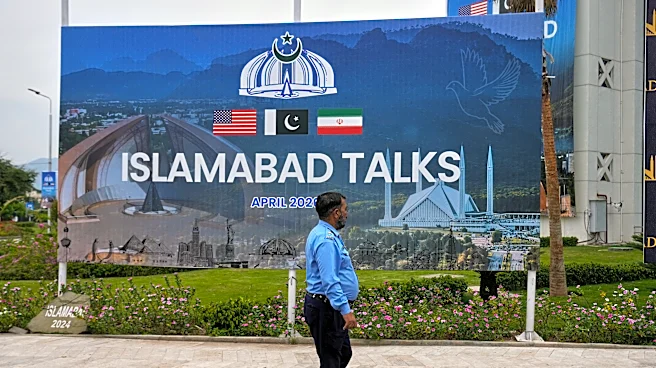
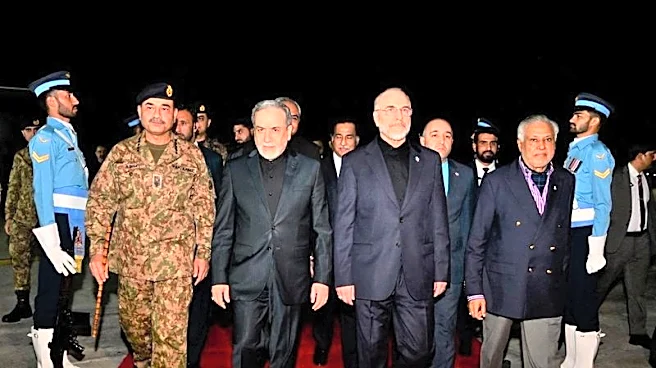
Ceasefire negotiations between the United States and Iran concluded in Islamabad, Pakistan, without reaching an agreement. The talks aimed to extend a fragile two-week truce set to expire on April 22. Both sides blamed each other for the failure, with no
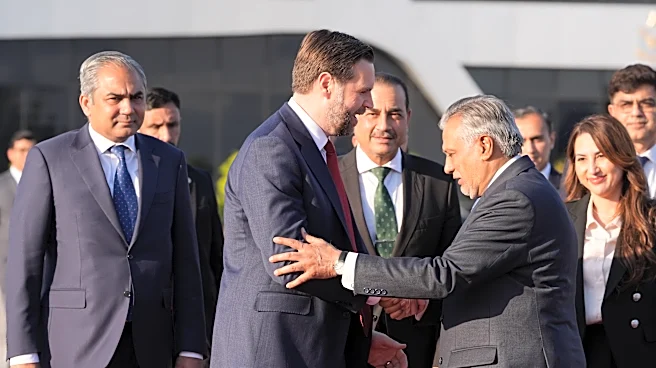
indication of when or if talks will resume. The discussions were part of efforts to resolve an inconclusive 40-day conflict that has caused significant damage to Iran and affected global markets. The US delegation, led by Vice President JD Vance, presented a 15-point plan demanding the elimination of Iran's nuclear and missile programs and the reopening of the Strait of Hormuz. Iran countered with a 10-point plan, seeking control over the strait and compensation for war damages.
Why It's Important?
The failure of the ceasefire talks highlights the entrenched positions of the US and Iran, with both sides unwilling to compromise on key issues. The Strait of Hormuz is a critical chokepoint for global oil supplies, and its closure has already impacted oil prices and market stability. The inability to reach an agreement raises concerns about the potential resumption of hostilities, which could further destabilize the region and disrupt global economic conditions. The situation underscores the challenges in addressing Iran's nuclear ambitions and its influence through proxy groups in the Middle East.
What's Next?
With the ceasefire talks having failed, the expiration of the current truce on April 22 looms large. The US and Iran may reassess their strategies, but the prospects for renewed negotiations remain uncertain. The international community will be watching closely, as any escalation could have significant implications for regional and global stability. The US may continue to exert pressure on Iran through economic sanctions and military posturing, while Iran may seek to bolster its defenses and regional alliances.