


What's Happening?
The Bellevue City Council is currently engaged in a significant debate over new funding sources for transportation infrastructure, with a decision expected later this fall. The city is considering a potential 0.1% increase in its sales tax rate and a $20
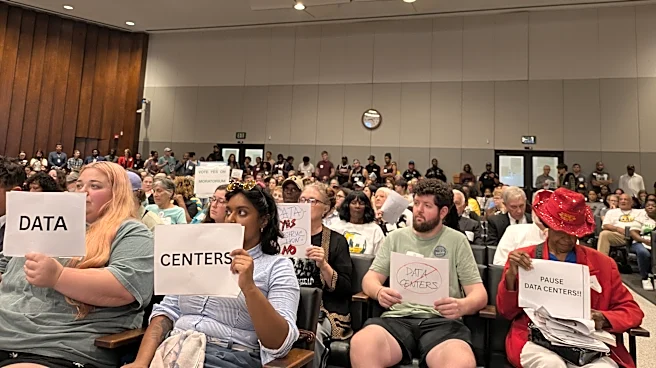
car tab fee, which would generate an estimated $100 million and $20 million respectively over a decade for transportation projects. City officials have presented various scenarios outlining how these funds would be allocated. The discussions reveal a tug-of-war between different stakeholders: sustainable transportation advocates and some council members are pushing for increased investment in bike and pedestrian safety, aiming to reduce deaths and serious injuries. Conversely, Bellevue's business interests, including the Bellevue Chamber of Commerce, are advocating for more investments in improving "underperforming" intersections to enhance vehicular capacity and ease traffic congestion. The Chamber has expressed conditional support for the new funding, emphasizing that sales tax revenue, largely paid by businesses, should prioritize high-growth areas and vehicle infrastructure, while car tab funds should benefit neighborhoods. They also oppose reducing vehicular capacity for bicycle facilities except as a last resort. The proposed scenarios show that if both the sales tax hike and car tab are adopted, an additional $35 million would go to bike and pedestrian projects and $16.4 million to neighborhood traffic calming over ten years, totaling 31% of the city's transportation spending. Major projects, such as the next phase of Spring Boulevard, would receive 35% of the spending.
Why It's Important?
This debate is crucial for Bellevue's future development as it prepares for significant housing growth around public transit. The decisions made will determine the city's transportation priorities for the next decade, impacting daily commutes, public safety, and the overall quality of life for residents and businesses. The tension between prioritizing vehicle mobility and sustainable transportation modes reflects a broader national challenge faced by many growing cities. Investing in bike and pedestrian infrastructure is vital for promoting public health, reducing carbon emissions, and creating a more livable urban environment, aligning with modern urban planning principles. However, neglecting vehicular capacity can lead to increased congestion, negatively affecting businesses reliant on efficient transportation and frustrating commuters. The outcome will also set a precedent for how Bellevue balances economic development with environmental and social sustainability goals. The involvement of powerful business groups like the Bellevue Chamber of Commerce highlights the significant influence of economic stakeholders in shaping public policy and resource allocation within the city.
What's Next?
Bellevue's budget deliberations are scheduled to continue throughout the current month, with major decisions anticipated at council meetings on November 3 and 10, leading up to a final vote on November 17. During this period, various stakeholders, including community groups, business representatives, and individual citizens, will likely continue to voice their opinions and lobby council members. The City Council will need to weigh these competing interests and potentially negotiate compromises to arrive at a funding plan that addresses the diverse needs of the city. The final decision will outline the specific projects to be funded, the allocation percentages for different transportation modes, and the overall vision for Bellevue's transportation network. Depending on the outcome, there could be further public discourse or even potential referendums if certain groups feel their concerns were not adequately addressed. The implementation of these new funding sources and projects will then begin, with ongoing monitoring and adjustments as the city evolves.
Beyond the Headlines
The "tug-of-war" over transportation funding in Bellevue reflects a deeper philosophical struggle within rapidly urbanizing areas: how to transition from car-centric planning to a more multimodal, sustainable approach while still accommodating existing and future vehicular traffic. The resistance from some business interests to repurpose traffic lanes for bicycle facilities, despite their cost-effectiveness for safety, underscores a persistent challenge in urban planning—the perceived conflict between economic efficiency (as defined by vehicle flow) and environmental/social benefits. This debate also touches upon equity, as Councilmember Naren Briar highlighted the safety concerns for children lacking sidewalks or crosswalks, suggesting that prioritizing certain modes over others can disproportionately affect vulnerable populations. The discussion about the Grand Connection Crossing, a pedestrian bridge over I-405, illustrates the ambition for transformative projects that enhance connectivity and placemaking, but also the significant financial hurdles and the need for creative funding solutions like tax-increment financing. Ultimately, Bellevue's decisions will not just be about infrastructure, but about defining its identity as a city—whether it leans towards a traditional suburban model or embraces a more cosmopolitan, multimodal future.