

What's Happening?
Adam Christopher Townsend, a 43-year-old man from Kansas City, Kansas, was killed in a single-vehicle crash on Monday morning in Olathe. The incident occurred off Interstate 35, just north of 159th Street. According to the Kansas Highway Patrol (KHP),
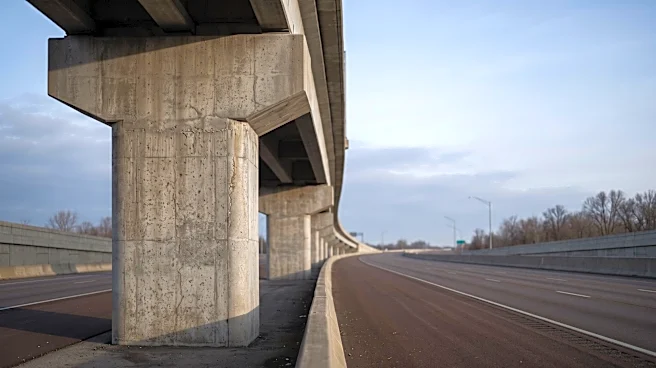
Townsend was driving a 2019 Dodge Challenger northbound on I-35 when his vehicle left the roadway for reasons currently unknown. The car first struck a Kansas Department of Transportation (KDOT) signpost before colliding with a pillar supporting the Lone Elm Road Bridge. Townsend was pronounced dead at the scene. Authorities confirmed that he was wearing his seat belt at the time of the accident. The investigation into the cause of the vehicle leaving the road is ongoing.
Why It's Important?
This fatal accident highlights ongoing concerns regarding road safety and infrastructure design, particularly at highway exits and near bridge supports. The involvement of a KDOT signpost and a bridge pillar in the crash raises questions about the placement of roadside furniture and protective barriers that could potentially mitigate the severity of such incidents. For the community, it represents a tragic loss of life and serves as a somber reminder of the inherent risks associated with driving, even when safety measures like seat belts are utilized. From a broader perspective, incidents like this often prompt reviews of traffic engineering standards and may lead to discussions about enhancing safety features along major roadways to prevent similar future occurrences. The unknown reason for the vehicle leaving the roadway also underscores the importance of driver awareness and the potential impact of various factors, including driver distraction or medical emergencies, on road safety.
What's Next?
The Kansas Highway Patrol will continue its investigation to determine the exact cause of Adam Christopher Townsend's vehicle leaving the roadway. This will likely involve examining the vehicle for mechanical failures, analyzing the crash site for contributing factors, and potentially reviewing any available surveillance footage or witness statements. The findings of this investigation could inform future recommendations for road safety improvements in the area, such as reassessing the placement of signposts or the design of bridge supports near high-speed traffic. Local authorities may also consider public awareness campaigns to remind drivers about safe driving practices and the importance of avoiding distractions. The community will mourn the loss, and the incident may spark local conversations about traffic safety measures.
Beyond the Headlines
Beyond the immediate tragedy, this incident could prompt a deeper examination of the psychological and societal impacts of fatal road accidents. Each such event affects not only the immediate family and friends of the deceased but also first responders, accident investigators, and the broader community. There might be discussions about the effectiveness of current driver education programs in addressing unexpected road hazards or driver behavior. Furthermore, the crash could reignite debates about the balance between road design efficiency and maximum safety, especially in areas where high-speed traffic interacts with fixed structures. The incident serves as a stark reminder of the fragility of life and the constant need for vigilance and continuous improvement in road safety infrastructure and driver responsibility.