


What's Happening?
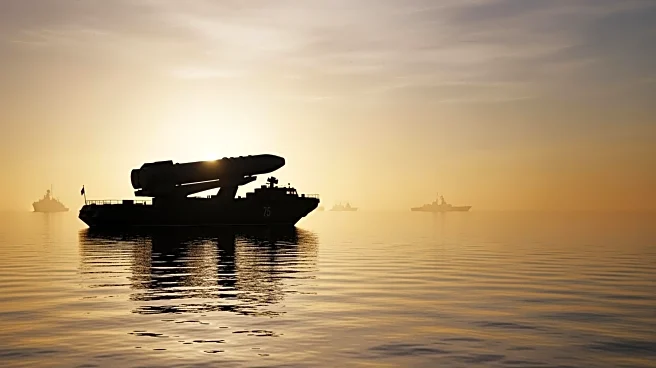
Iran has declared its intention to conduct live-fire military drills in the Strait of Hormuz, a critical maritime passage that handles 20% of the world's oil transport. This announcement comes shortly after the United States revealed plans for its own
military exercises in the region. The Iranian military exercises are scheduled for the upcoming Sunday and Monday, as per a warning issued to all ships in the area. The U.S. has increased its military presence in the Middle East, deploying the USS Abraham Lincoln aircraft carrier and a squadron of F-15E Strike Eagle fighter jets. This move is part of a broader strategy by President Trump to pressure Iran into negotiating a new nuclear deal. The U.S. military exercises aim to demonstrate the ability to deploy and sustain combat airpower in the region, showcasing America's regional partnerships and response capabilities.
Why It's Important?
The developments in the Strait of Hormuz are significant due to the strategic importance of the passage for global oil supply. The military posturing by both Iran and the U.S. underscores escalating tensions that could impact international oil markets and regional stability. The U.S. aims to leverage its military presence to compel Iran to negotiate a nuclear deal that prevents the development of nuclear weapons. However, Iran's decision to conduct its own military drills signals its readiness to counter U.S. pressure, potentially leading to heightened military confrontations. The situation also reflects broader geopolitical dynamics, with the U.S. seeking to assert its influence in the Middle East while Iran aims to demonstrate its military capabilities.
What's Next?
The immediate future may see increased military activity in the Strait of Hormuz, with potential risks of miscalculation or accidental confrontations between U.S. and Iranian forces. Diplomatic efforts may continue through intermediaries, but direct negotiations between the U.S. and Iran remain unlikely given the current tensions. The international community, particularly countries reliant on oil from the region, will be closely monitoring the situation. Any escalation could prompt calls for diplomatic intervention to prevent a broader conflict. The U.S. may also seek to strengthen alliances with regional partners to counter Iran's influence.