






What's Happening?
The European Investment Bank (EIB), through its development arm EIB Global, is providing a grant of up to €4 million to the World Food Programme (WFP). This funding aims to support the development and rollout of tailored climate-risk insurance products
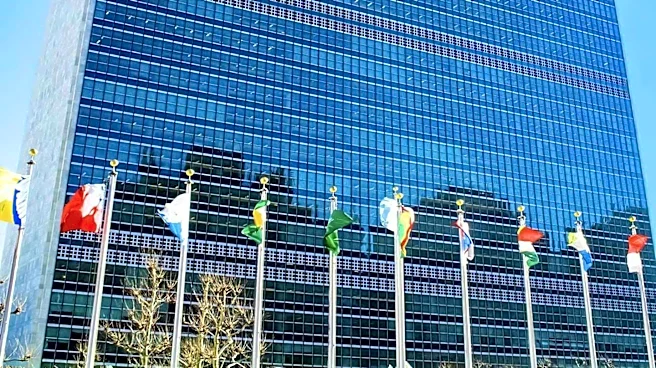
for smallholder farmers in Ethiopia. This initiative marks the EIB's first climate-risk insurance project and was announced during the United Nations Convention to Combat Desertification (UNCCD) COP 17 in Mongolia. The grant will supplement an existing €110 million credit line from EIB Global for the third phase of the Rural Financial Intermediation Programme (RUFIP III) in Ethiopia, channeled through the Development Bank of Ethiopia. The project is designed to de-risk agricultural portfolios for rural finance institutions and help farmers accessing RUFIP III financing manage climate-related shocks. Activities include capacity building for the Development Bank of Ethiopia, rural finance institutions, and smallholder farmers, alongside establishing a Premium Guarantee Fund to pre-finance insurance premiums. This fund will address liquidity constraints for borrowers and provide a guarantee mechanism for rural finance institutions in case of premium payment defaults.
Why It's Important?
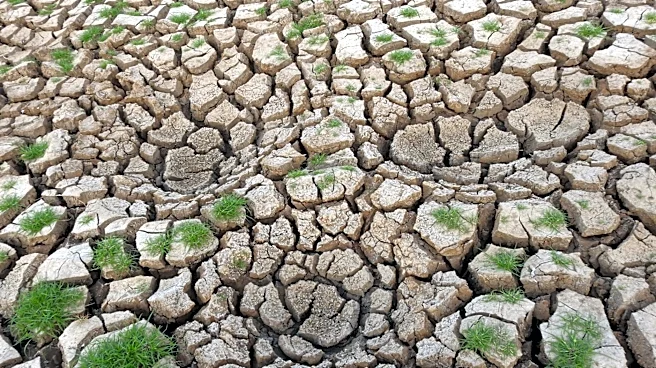
This initiative is crucial for enhancing the resilience of Ethiopia's agricultural sector, which is highly vulnerable to climate change. By providing climate-risk insurance, the EIB and WFP are directly addressing a significant barrier to financial stability and productivity for smallholder farmers. Climate shocks can devastate harvests and incomes, eroding progress in vulnerable communities. Access to finance is vital for agricultural productivity, but climate risks often deter both farmers and lenders from making necessary investments. This partnership integrates climate risk insurance, rural finance, and capacity strengthening, enabling farmers to invest with greater confidence and recover more quickly from adverse weather events. The project also supports micro, small, and medium-sized enterprises by expanding access to microinsurance, thereby reducing climate-related risks to economic activity and promoting stable incomes and sustainable growth. This model could serve as a blueprint for similar interventions in other climate-vulnerable regions, demonstrating an effective strategy for development finance.
What's Next?
The World Food Programme will utilize its expertise in rural finance and climate-resilience programming in Ethiopia to develop and pilot an index-based microinsurance scheme in collaboration with private insurance companies. These insurance products will be introduced to selected rural finance institutions under RUFIP III, supported by technical assistance, training, and awareness-raising efforts. Initially, the WFP will manage the Premium Guarantee Fund, with plans to transfer its administration to the Development Bank of Ethiopia to ensure long-term sustainability. This operation is projected to cover approximately 210,000 smallholder farmers in Ethiopia with adapted microinsurance products, protecting them against losses of crops or livestock due to adverse weather conditions or natural disasters. The success of this pilot could lead to the expansion of similar climate-risk insurance programs, potentially influencing broader development finance strategies and fostering more inclusive and climate-resilient financial systems in other developing nations.
Beyond the Headlines
The EIB's foray into climate-risk insurance for smallholder farmers highlights a growing recognition of the interconnectedness between climate change, food security, and financial stability in developing economies. This project moves beyond traditional aid by fostering a market-based solution that empowers farmers to manage risks independently, rather than relying solely on post-disaster relief. The emphasis on capacity building and the establishment of a Premium Guarantee Fund addresses systemic issues within rural finance, aiming to create a self-sustaining ecosystem for climate resilience. This approach also underscores the ethical imperative of supporting vulnerable populations disproportionately affected by climate change, which is largely driven by global emissions. By integrating insurance with credit and technical assistance, the initiative promotes a holistic development model that could mitigate migration pressures, reduce poverty, and enhance regional stability, demonstrating a proactive strategy for global climate adaptation and sustainable development.