




What's Happening?
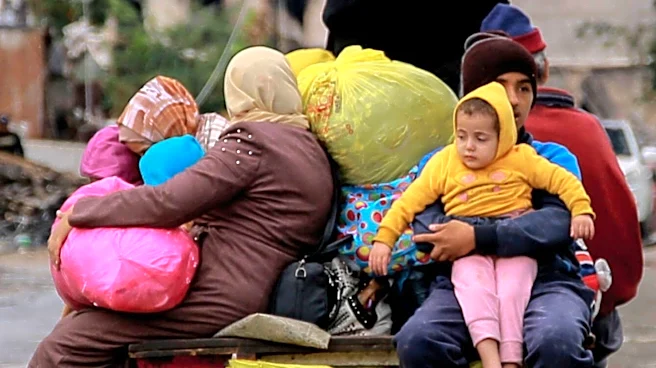
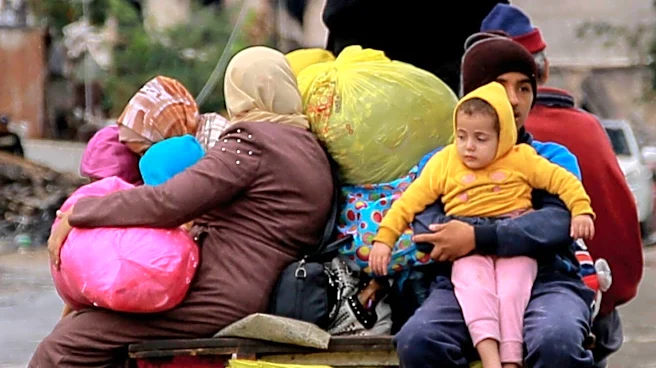
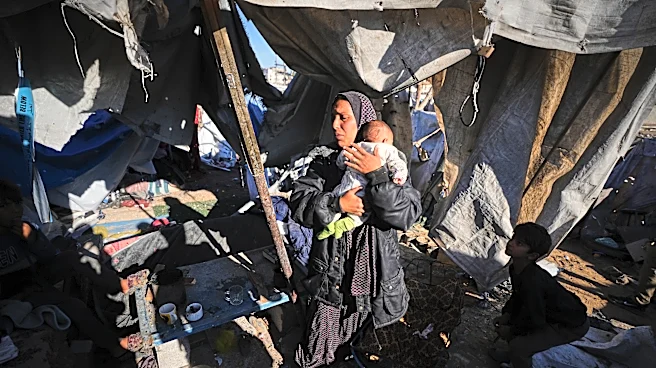
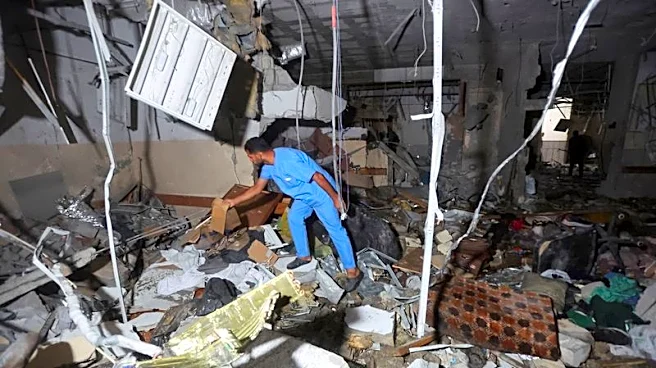
Gaza is experiencing a severe humanitarian crisis, compounded by heavy rainfall and flooding since November 6, 2026. This has affected approximately 46,000 households and damaged over 40,000 family shelters, with over 9,000 reportedly destroyed beyond
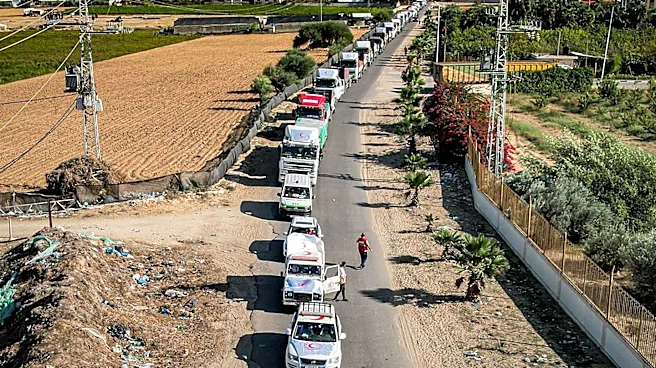
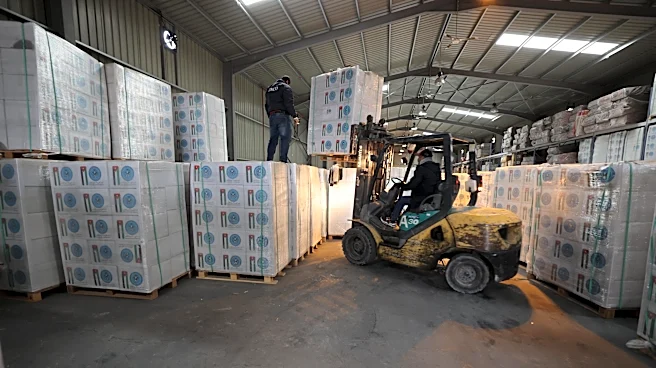
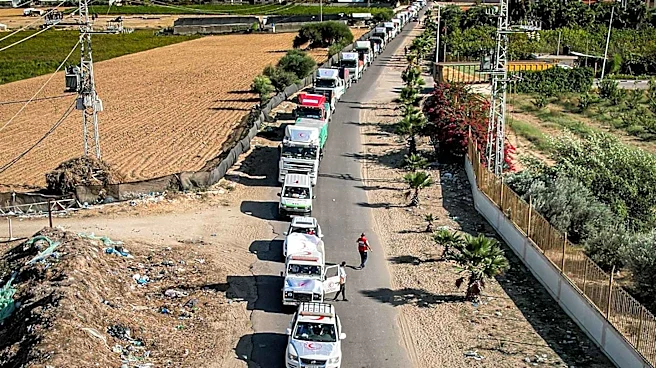
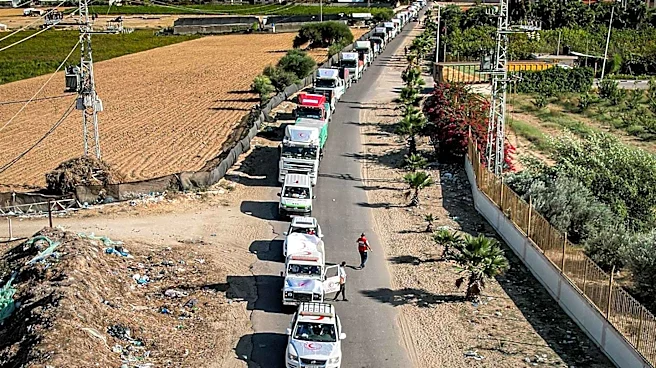
repair. The flooding has led to sewage-contaminated stormwater, posing significant public health risks, and has disrupted health facilities, suspended services, and caused medicine shortages. The United Nations Office for the Coordination of Humanitarian Affairs (OCHA) reports a 42% decrease in humanitarian aid trucks offloaded between November 2 and 8, primarily due to the suspension of the Egyptian corridor by Israeli authorities, citing smuggling concerns. This reduction in aid, alongside funding constraints, has severely limited the capacity of humanitarian partners to respond to the escalating needs, particularly with winter approaching.
Why It's Important?
The confluence of natural disaster and aid restrictions has created an extremely dire situation for the civilian population in Gaza. The damage to shelters and infrastructure, combined with contaminated water, significantly increases the risk of hypothermia, respiratory infections, and waterborne diseases. The severe shortages of medicines, medical supplies, and essential items like fuel and spare parts for generators are crippling the healthcare system. The suspension of the Egyptian aid corridor and overall reduced aid volumes mean that humanitarian organizations are unable to provide adequate assistance, leaving thousands vulnerable. This situation not only exacerbates immediate suffering but also has long-term implications for public health, education, and overall stability in the region, potentially leading to a more profound humanitarian catastrophe.
What's Next?
Humanitarian organizations are struggling to meet the overwhelming needs in Gaza due to ongoing restrictions and funding shortfalls. The UNRWA has opened a new health center, but the overall capacity remains insufficient. The immediate focus is on addressing the urgent needs for shelter, clean water, sanitation, and medical care, especially as winter conditions persist. Efforts will likely continue to press for the reopening of aid corridors and increased, unhindered access for humanitarian supplies. The international community will need to address the funding constraints and advocate for the protection of humanitarian operations. Without significant changes in aid access and increased support, the humanitarian crisis is expected to worsen, leading to further displacement, disease, and fatalities.
Beyond the Headlines
The crisis in Gaza highlights the complex challenges of delivering humanitarian aid in conflict-affected areas, particularly when compounded by natural disasters and political restrictions. The reported reasons for aid restrictions, such as smuggling concerns, underscore the intricate security and logistical hurdles involved. This situation also brings to light the vulnerability of civilian populations caught in prolonged conflicts and the critical importance of international humanitarian law in ensuring their protection and access to essential services. The long-term implications include the potential for a generation to suffer from chronic health issues, educational setbacks, and psychological trauma, further entrenching instability in the region. It also raises questions about the effectiveness of international mechanisms in safeguarding humanitarian access and upholding human rights in such contexts.