





What's Happening?
Global hunger saw a decline for the third consecutive year in 2025, a positive trend that brought the number of people facing hunger down. Despite this progress, 645 million individuals worldwide still experienced hunger. The Food and Agriculture Organization
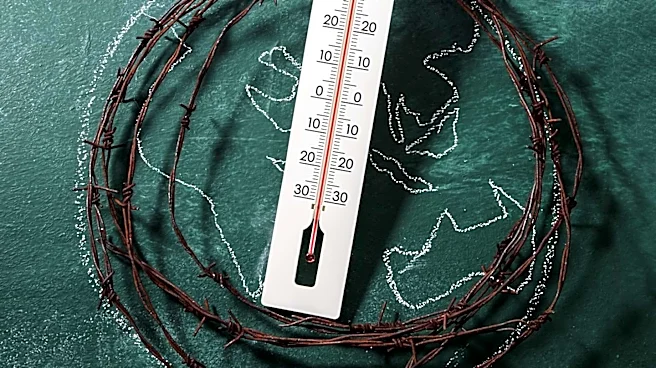
(FAO) highlighted that this decline has not been consistent over the past decade. Looking ahead to 2026 and 2027, a strong El Niño weather pattern is anticipated to pose a significant threat to harvests and rural livelihoods, potentially impacting the ongoing efforts to reduce global hunger. The launch of the Global Alliance against Hunger and Poverty in 2024 has injected renewed momentum into the shared ambition of eradicating hunger and poverty, with FAO actively assisting countries in translating this ambition into concrete actions. The organization emphasizes that hunger and poverty are not inevitable and that innovative, low-cost solutions can contribute significantly to addressing these challenges.
Why It's Important?
The persistent challenge of 645 million people facing hunger, even with a global decline, underscores the critical need for sustained international efforts and innovative solutions. The projected impact of a strong El Niño in 2026 and 2027 on harvests and rural livelihoods highlights the vulnerability of food systems to climate phenomena. This could lead to increased food insecurity in affected regions, potentially reversing some of the recent gains in hunger reduction. The Global Alliance against Hunger and Poverty, with FAO's involvement, is crucial for coordinating global responses and implementing effective strategies. For the U.S., global food security issues can have indirect impacts, including humanitarian aid demands, potential migration pressures, and disruptions to international trade and supply chains. Investing in global hunger reduction also aligns with U.S. foreign policy objectives of stability and development.
What's Next?
The immediate focus will be on monitoring the development and impact of the strong El Niño in 2026 and 2027 to mitigate its potential adverse effects on harvests and rural livelihoods. International organizations, including FAO and the Global Alliance against Hunger and Poverty, will likely intensify their efforts to support vulnerable countries with preparedness measures, early warning systems, and humanitarian assistance. There will be a continued emphasis on developing and implementing innovative, low-cost solutions to enhance food security and resilience in affected communities. Stakeholders will also be working to ensure that the momentum generated by the Global Alliance against Hunger and Poverty translates into tangible, long-term strategies for sustainable hunger eradication. This will involve continued collaboration between governments, NGOs, and local communities to build more resilient food systems.
Beyond the Headlines
The narrative of declining global hunger alongside persistent widespread hunger reveals a complex challenge that extends beyond mere food production. It touches upon issues of equitable distribution, access, and the resilience of local economies. The threat of El Niño underscores the profound impact of climate change and extreme weather events on human well-being, highlighting the interconnectedness of environmental stability and food security. The emphasis on innovative, low-cost solutions suggests a shift towards more sustainable and locally adaptable approaches, moving away from one-size-fits-all interventions. This also raises ethical considerations about global responsibility and the moral imperative to ensure basic sustenance for all, particularly in the face of increasing global wealth disparities. The long-term success in combating hunger will depend not only on immediate relief but also on addressing systemic issues like poverty, conflict, and inadequate infrastructure.