








What's Happening?
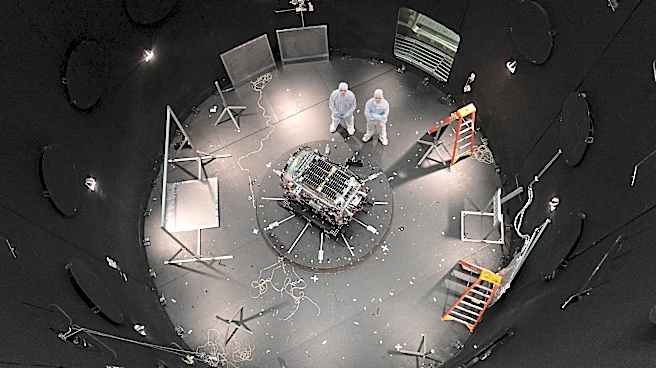
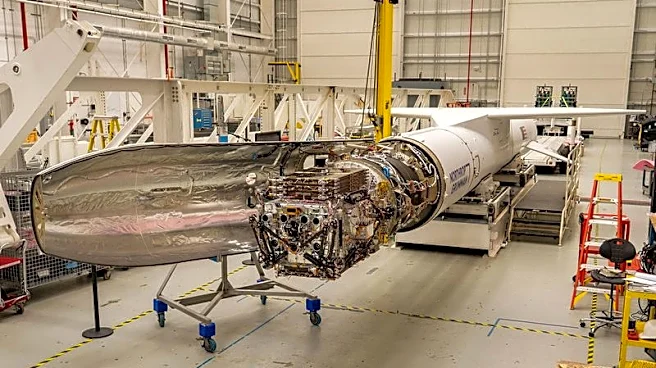
NASA has launched a rescue mission to save its Swift Observatory, which is at risk of crashing back to Earth due to recent solar storms. The mission involves a three-armed spacecraft, launched by Northrop Grumman from the Marshall Islands, to capture
and boost the telescope's orbit. The Swift Observatory, launched in 2004, is currently orbiting 224 miles above Earth but is sinking rapidly. NASA has contracted Katalyst Space Technologies for $30 million to execute this mission, aiming to raise the telescope's altitude by 150 miles. The operation is critical as the telescope is predicted to fall beyond recovery by October if not boosted. The mission, described as high-risk and high-reward, was expedited to prevent the telescope from burning up in the atmosphere.
Why It's Important?
The successful rescue of the Swift Observatory is crucial for continuing its mission of tracking cosmic phenomena such as gamma-ray bursts and exploding stars. This mission highlights the challenges faced by space agencies in maintaining aging satellites and telescopes in orbit, especially as solar activity increases. The operation also sets a precedent for future salvage missions, potentially including the Hubble Space Telescope, which faces similar risks. The mission underscores the importance of maintaining space infrastructure to support scientific research and exploration, which can have significant implications for our understanding of the universe.
What's Next?
If the mission is successful, the Swift Observatory could resume its scientific operations by September. The outcome of this mission may influence future decisions regarding the maintenance and extension of other space telescopes and satellites. NASA and other space agencies might consider similar salvage operations for other critical space assets. The mission's success could also encourage further investment in space technology and infrastructure, ensuring the longevity and effectiveness of space-based scientific research.