





What's Happening?
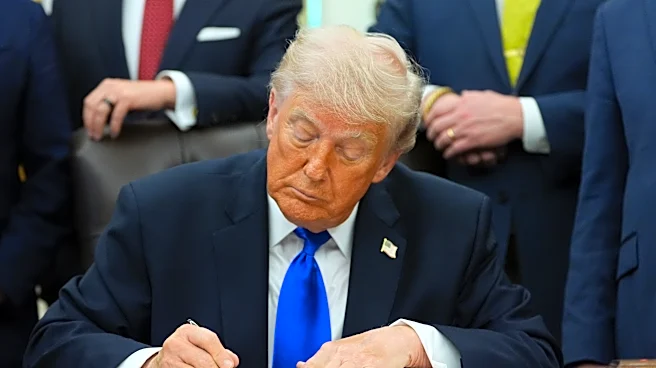
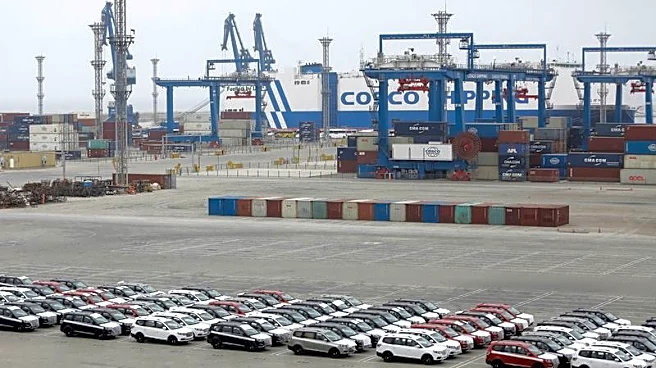
President Donald Trump announced plans to increase tariffs on cars and trucks imported from the European Union to 25%, effective next week. This decision comes after Trump accused the EU of not complying with a trade agreement established in July 2025,
which set a 15% tariff ceiling on most goods. The tariff hike aims to encourage automakers to relocate production to the U.S., where vehicles manufactured domestically would be exempt from the tariffs. The announcement has sparked concerns among European automakers and could have significant implications for the automotive industry.
Why It's Important?
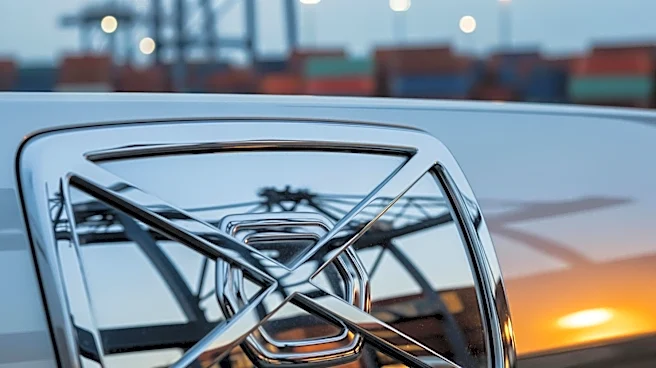
The tariff increase could have a substantial impact on the automotive industry, particularly affecting European car manufacturers like Volkswagen, BMW, and Mercedes-Benz. These companies may face increased costs when exporting vehicles to the U.S., potentially leading to higher prices for consumers. The move could also incentivize automakers to invest more in U.S. manufacturing facilities, potentially benefiting American workers and the domestic economy. However, it risks escalating trade tensions between the U.S. and the EU, which could lead to retaliatory measures and further complicate trade relations.
What's Next?
European automakers and EU officials are likely to seek diplomatic solutions to address the tariff increase and prevent further escalation. The situation may prompt European companies to accelerate their investment in U.S. production facilities to avoid the tariffs. Additionally, the development could influence future trade negotiations and economic policies between the U.S. and the EU. The outcome of these efforts will be closely monitored by industry stakeholders and policymakers.