







What's Happening?
Researchers at Montana State University (MSU) have been awarded a $1.5 million grant from the Montana Department of Natural Resources and Conservation, funded through the Ranchland Stewardship Program. This grant will support a project focused on studying
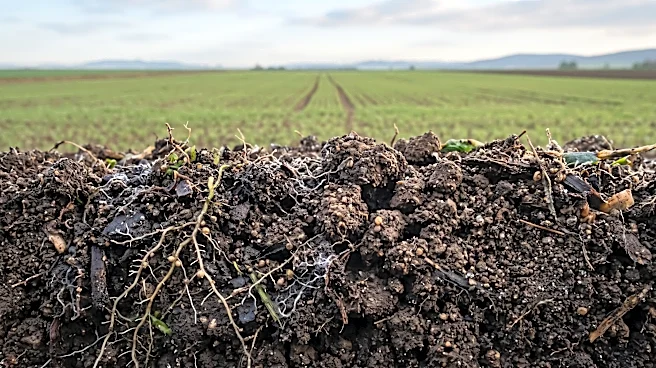
adaptive grazing practices across Montana ranches. The initiative, led by Noah Davis, an assistant professor of grazing ecology and management, will involve a multidisciplinary team including experts in livestock, vegetation, and soil carbon. The project, set to begin this fall and continue through 2029 with fieldwork in 2027 and 2028, aims to understand what constitutes effective grazing management in the 21st century. It will fund three graduate students and one postdoctoral researcher who will collaborate with 10 to 15 ranches statewide already employing adaptive grazing methods. The research will document stocking rates, stocking density, and livestock performance, as well as analyze the effects of grazing on plant communities, soil health, and carbon storage in soil.
Why It's Important?
This grant is significant for the agricultural sector in Montana and potentially for broader U.S. ranching practices. By studying adaptive grazing management, researchers aim to identify sustainable methods that can maintain healthy land while supporting productive ranches. This has direct implications for the economic viability of ranching operations, as improved grazing practices can lead to better livestock performance and soil health. The focus on carbon storage in soil also addresses growing environmental concerns and could contribute to climate change mitigation efforts within agriculture. Furthermore, the project emphasizes collaboration between academic researchers and active ranchers, fostering a practical approach to scientific inquiry. This partnership aligns with MSU's land-grant mission, ensuring that research directly benefits producers and provides valuable learning opportunities for students, thereby strengthening the future workforce in agricultural science and management.
What's Next?
The project is scheduled to commence this fall, with fieldwork planned for 2027 and 2028, and will continue through 2029. The research team will select 10 to 15 Montana ranches that are already utilizing adaptive grazing approaches to participate in the study. The findings from this research are expected to provide valuable insights into effective grazing management strategies, which could then be disseminated to a wider audience of ranchers. The relationships established between the researchers and participating ranchers are anticipated to extend beyond the project's duration, fostering ongoing collaboration and knowledge exchange. The involvement of graduate students and a postdoctoral researcher will also contribute to the development of future experts in grazing ecology and sustainable agriculture, ensuring a continued focus on these critical areas.
Beyond the Headlines
The study's emphasis on adaptive grazing management reflects a broader shift in agricultural practices towards more sustainable and environmentally conscious methods. Historically, grazing management has primarily focused on stocking rates and season of use. However, this project incorporates modern technologies like satellite imagery, drones, and temporary electric/virtual fencing, highlighting the evolving role of technology in agriculture. The research's potential to identify practices that increase carbon storage in soil could position adaptive grazing as a key strategy in natural climate solutions, offering a pathway for the agricultural sector to contribute to environmental sustainability. This also underscores the ethical responsibility of land management to balance economic productivity with ecological stewardship, promoting a holistic approach to ranching that benefits both the environment and the agricultural community.