




What's Happening?
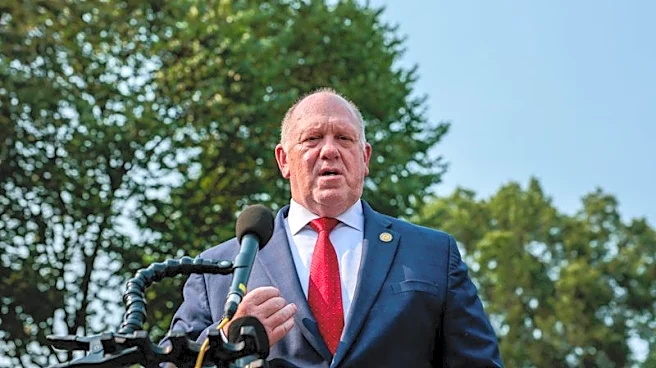
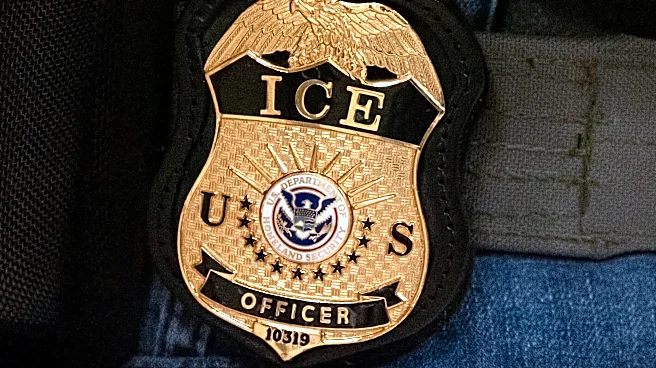
White House border czar Tom Homan appeared on CBS' 'Face the Nation' to defend the use of unmarked vehicles by U.S. Immigration and Customs Enforcement (ICE) following a fatal shooting in Houston. The incident involved ICE officers pursuing Lorenzo Salgado
Araujo, who was fatally shot. Homan argued that unmarked vehicles are essential for locating suspects and maintained that compliance with law enforcement could have prevented the deaths. The family of Salgado claimed he believed he was being pursued by robbers due to the unmarked vehicle. Homan stated that ICE vehicles are equipped with emergency lights, although he admitted he had not reviewed the videos of the incident. The controversy has raised questions about the use of unmarked vehicles and the lack of body cameras during such operations.
Why It's Important?
The use of unmarked vehicles by ICE has sparked a debate about transparency and accountability in law enforcement operations. The incident highlights the potential risks associated with unmarked vehicles, particularly in situations where individuals may not recognize law enforcement officers. This controversy could impact public trust in ICE and other federal agencies, especially in communities with significant immigrant populations. The lack of body cameras further complicates the issue, as it limits the ability to verify the actions of officers during such encounters. The outcome of ongoing investigations could influence future policies regarding the use of unmarked vehicles and body cameras in federal operations.
What's Next?
Investigations into the Houston shooting and a similar incident in Maine are ongoing. These investigations will likely determine whether ICE officers followed proper protocols and whether changes are needed in their operational procedures. Homan has expressed support for the nationwide deployment of body cameras, which could become a standard requirement for ICE officers in the future. The results of these investigations may lead to policy changes aimed at increasing transparency and accountability in federal law enforcement operations.