





What's Happening?
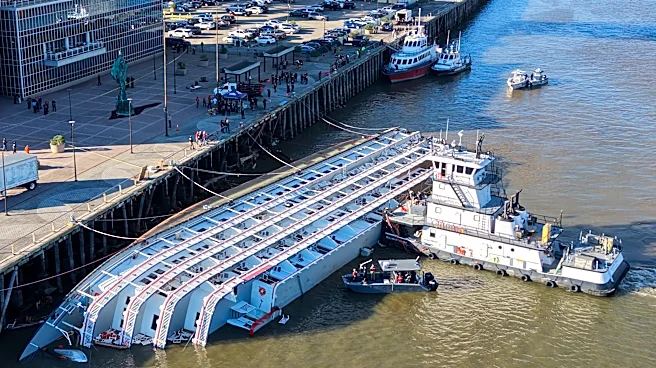
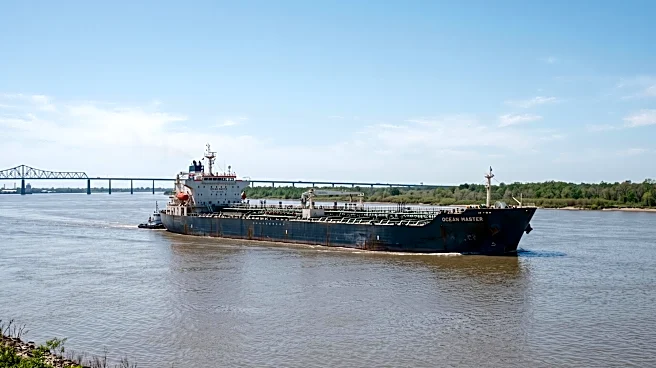
A cruise ship, the American Heritage, carrying approximately 190 people, sank in the Mississippi River in New Orleans after a collision with the tanker Atlantic Asphalt. The incident occurred when the tanker reportedly lost control due to a steering system
malfunction, causing it to veer into the cruise ship. Following the impact, the American Heritage began taking on water and capsized, becoming half-submerged within 22 minutes. More than 100 passengers and crew members jumped into the river, and dozens sustained injuries. Fortunately, no fatalities have been reported. The causes of the accident are currently under investigation.
Why It's Important?
This incident highlights critical safety concerns within the U.S. maritime industry, particularly regarding vessel maintenance and operational protocols on busy waterways like the Mississippi River. The potential for steering malfunctions in large vessels like tankers poses a significant risk to both commercial and passenger traffic, as demonstrated by the rapid sinking of the American Heritage. The event could lead to increased scrutiny from regulatory bodies such as the U.S. Coast Guard and the National Transportation Safety Board (NTSB) regarding vessel inspection standards and emergency response procedures. For the cruise industry, such accidents can erode public confidence, potentially impacting bookings and necessitating a review of passenger safety measures and evacuation protocols. The economic impact could include significant costs for salvage operations, environmental cleanup if any spills occurred, and potential legal liabilities for the companies involved.
What's Next?
Authorities will continue their investigation into the collision, focusing on the reported steering malfunction of the Atlantic Asphalt tanker. This will likely involve detailed examinations of the tanker's maintenance records, crew testimonies, and black box data. The U.S. Coast Guard and NTSB are expected to release preliminary findings, which could lead to recommendations for improved maritime safety regulations or operational changes for vessels navigating the Mississippi River. The injured passengers and crew members will likely pursue legal action against the responsible parties, leading to potential lawsuits and insurance claims. The cruise ship operator will also face the challenge of managing public perception and reassuring future passengers about safety on their vessels. Salvage operations for the American Heritage will be initiated to remove the sunken vessel from the river, which could be a complex and costly endeavor.
Beyond the Headlines
The incident on the Mississippi River could prompt a broader reevaluation of infrastructure and traffic management on major U.S. waterways. The increasing volume of both commercial and recreational vessels, coupled with aging infrastructure and potential human error or mechanical failures, presents ongoing challenges to maritime safety. This event may also reignite discussions about the adequacy of current emergency response capabilities for large-scale maritime accidents in inland waters. Furthermore, the psychological impact on those who experienced the rapid sinking and had to jump into the river could be significant, underscoring the need for comprehensive support for survivors of such traumatic events. The incident serves as a stark reminder of the inherent risks in maritime travel and the continuous need for vigilance and robust safety measures.