


What's Happening?
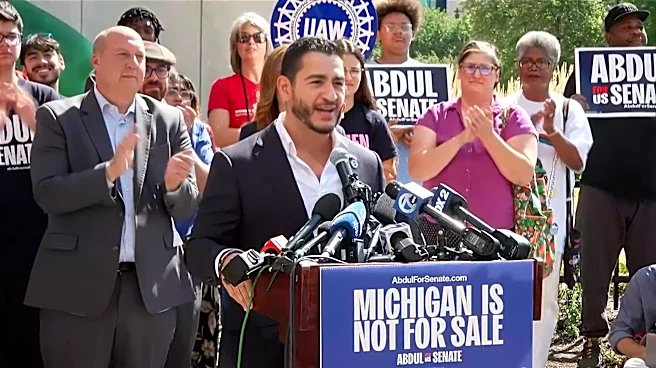
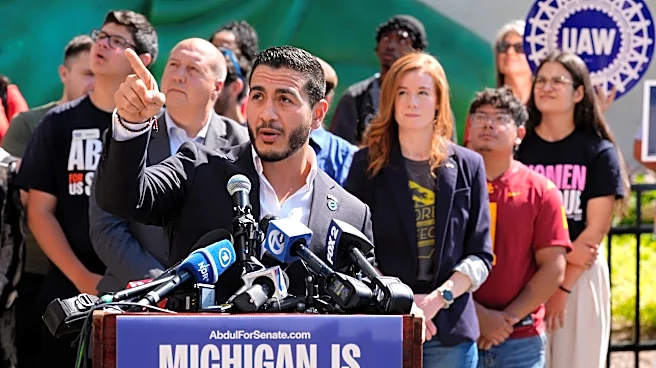
Abdul El-Sayed, a progressive candidate and former Wayne County health commissioner, won the Democratic nomination for the U.S. Senate in Michigan, defeating the establishment-backed Rep. Haley Stevens. Despite Stevens' support from key Democratic figures
and significant financial backing, El-Sayed's victory was narrower than expected, indicating a competitive primary landscape. This win is part of a broader trend of progressive victories in Democratic primaries, although the results suggest that the party's base is not fully aligned with the progressive agenda. El-Sayed's campaign was supported by prominent progressives, including Sen. Bernie Sanders and members of the 'Squad'.
Why It's Important?
El-Sayed's victory represents a significant moment for progressives within the Democratic Party, highlighting their growing influence and ability to challenge establishment candidates. This outcome could signal a shift in the party's priorities, potentially affecting policy discussions and electoral strategies. However, the close nature of the race suggests that while progressives are gaining ground, there remains a substantial portion of the Democratic electorate that is cautious about fully embracing their platform. This dynamic could impact the party's approach in future elections, particularly in swing states like Michigan.
What's Next?
El-Sayed will now face the challenge of uniting the Democratic base and appealing to a broader electorate in the general election. He will need to attract voters who supported Stevens and potentially sway some Republican voters to secure a win. The general election will be crucial for determining control of the Senate, which is currently closely contested. El-Sayed's ability to navigate these challenges will be a test of the progressive movement's viability in competitive races. The outcome could influence the Democratic Party's strategy in future elections, particularly regarding the balance between progressive and moderate elements.