



What's Happening?
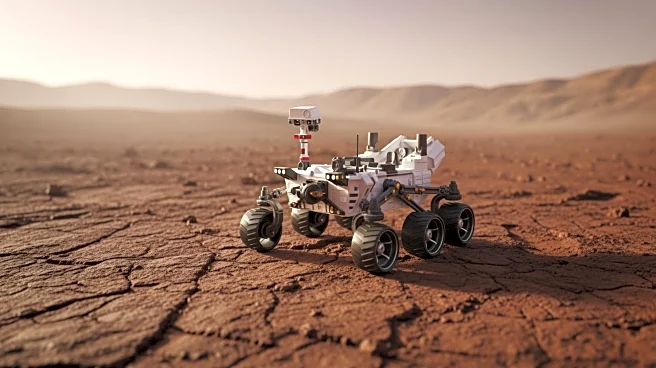
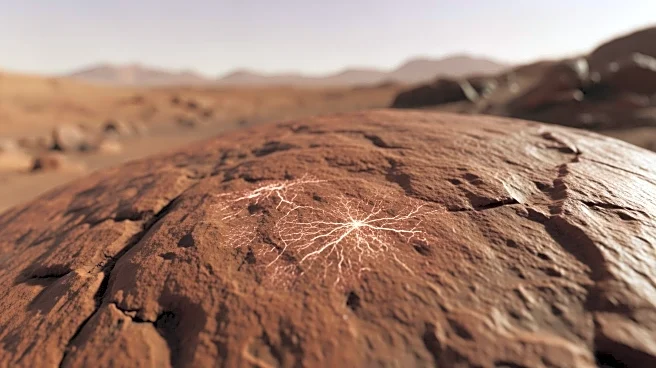
NASA's Perseverance rover has discovered minerals on Mars that suggest the presence of a potential biosignature, indicating possible past microbial activity. The rover drilled a core sample from Sapphire Canyon mudstone, revealing minerals like vivianite
and greigite, which on Earth are often linked to microbial processes. This discovery, made in 2026, is considered the closest evidence yet of life on Mars, although scientists caution that nonbiological chemistry could also explain the findings. The core sample has been sealed for potential return to Earth for further analysis, which could provide more definitive answers.
Why It's Important?
The discovery of a potential biosignature on Mars is significant as it advances the search for extraterrestrial life and enhances our understanding of Mars' habitability. If the minerals formed through microbial-like processes, it suggests that Mars once had environments conducive to life. This finding could influence future Mars exploration missions and the development of technologies for detecting life on other planets. It also underscores the importance of continued investment in space exploration and scientific research, which could lead to groundbreaking discoveries about life beyond Earth.
What's Next?
NASA plans to return the core sample to Earth for detailed laboratory analysis, which could confirm the presence of life on Mars. The Perseverance rover will continue to explore and map the Martian surface, searching for additional biosignatures. Future missions, including potential human exploration, may be influenced by these findings, as they could provide insights into the planet's past environments and guide the search for life. The scientific community will likely focus on developing new methods to distinguish biological signals from nonbiological ones in Martian samples.