



What's Happening?
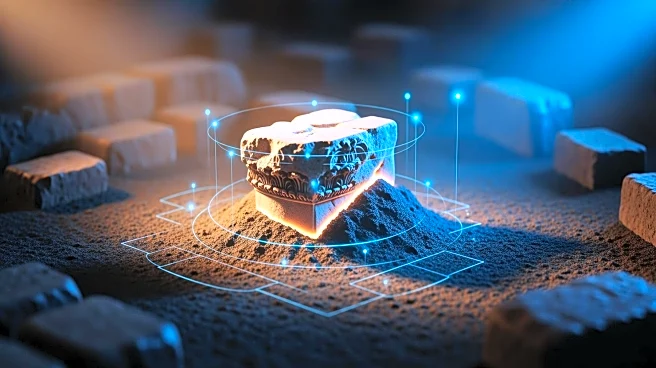
Researchers are employing digital archaeology techniques to uncover previously hidden aspects of Pompeii, a Roman city destroyed by the eruption of Mount Vesuvius in AD 79. The Pompeii Reset project, led by Dr. Susanne Muth from Humboldt University, uses
remote sensing technology, close-range photography, and traditional archaeological methods to reconstruct lost architecture. This approach has revealed structures such as towers, which were symbols of wealth and power, potentially altering the understanding of Pompeii's historical skyline. The project aims to preserve Pompeii's cultural heritage through noninvasive digital reconstruction, providing a more nuanced understanding of life in the ancient city.
Why It's Important?
The digital reconstruction of Pompeii's architecture offers significant insights into the daily lives and social structures of its ancient inhabitants. By revealing previously unknown structures, such as towers within the city, researchers can better understand the social dynamics and architectural innovations of the time. This work not only preserves cultural heritage but also enhances historical accuracy, potentially influencing future archaeological methods and studies. The findings could reshape perceptions of ancient Roman urban planning and architecture, highlighting the importance of digital tools in preserving and interpreting historical sites.
What's Next?
The Pompeii Reset project continues to explore the city, aiming to digitally reconstruct more buildings and preserve Pompeii's heritage for future generations. Researchers are using advanced technologies like LiDAR scans and drones to capture detailed images and create 3D models of the city's structures. These efforts may lead to further discoveries about Pompeii's architecture and social history, providing new questions and answers about life in the ancient city. The project has no set end date, indicating ongoing research and potential future revelations about Pompeii's lost architecture.
Beyond the Headlines
The use of digital archaeology in Pompeii represents a broader shift towards integrating technology in historical preservation and research. This approach allows for more accurate reconstructions and interpretations of ancient sites, potentially influencing how other archaeological projects are conducted worldwide. The findings challenge previous assumptions about Roman urban architecture, suggesting that towers were more common than previously thought. This could lead to a reevaluation of Roman architectural practices and social hierarchies, offering deeper insights into the cultural and historical context of ancient Rome.