






What's Happening?
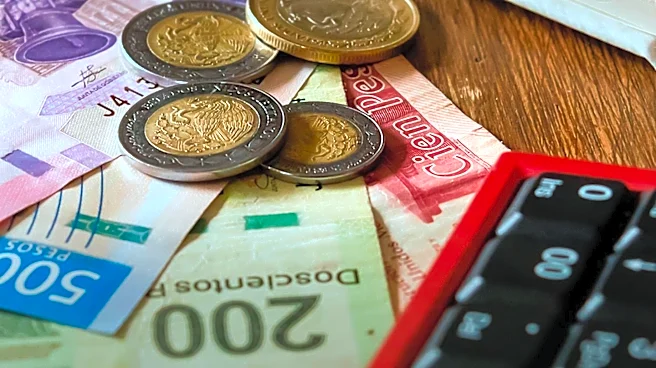
The West Bank is experiencing an economic challenge due to an overabundance of Israeli shekels in the Palestinian banking system. This surplus of cash is causing significant operational difficulties for residents and businesses. The issue arises from
a conflict between the Bank of Israel and the Palestinian Monetary Authority, with Israel imposing limits on the amount of physical currency it allows to be taken back from the West Bank. This cap has not kept pace with economic growth, leading to a situation where banks are unable to convert cash into electronic balances. As a result, businesses are struggling to make electronic payments, and some gas stations have had to stop accepting cash or even temporarily close. The situation has prompted strikes and protests from business owners, but little response has been seen from the authorities.
Why It's Important?
The cash surplus in the West Bank has broader implications for the region's economy and stability. The inability to manage the excess cash effectively hampers the banking system's functionality, affecting the private sector's ability to operate efficiently. This situation could lead to a slowdown in economic activities, impacting the livelihoods of many Palestinians who rely on cash transactions. Furthermore, the issue highlights the complex economic interdependencies between Israel and the Palestinian territories, where monetary policies are influenced by political tensions. The ongoing economic strain could exacerbate existing socio-political issues, potentially leading to increased unrest and instability in the region.
What's Next?
If the cash surplus issue remains unresolved, it could lead to further economic deterioration in the West Bank. Businesses may face increased operational costs and difficulties in importing essential goods, such as fuel and medical supplies. The Palestinian Monetary Authority and local businesses are likely to continue seeking solutions, possibly through negotiations with Israeli authorities to adjust the cash transfer limits. Additionally, there may be increased pressure on international organizations to intervene and assist in resolving the economic crisis. The situation requires urgent attention to prevent further economic and social fallout.
Beyond the Headlines
The excess cash problem in the West Bank also raises ethical and legal questions about the use of economic measures as a form of political leverage. The restrictions on cash transfers can be seen as a tool of economic warfare, impacting the daily lives of ordinary Palestinians. This situation underscores the need for a more equitable and sustainable economic framework that respects the rights and needs of the Palestinian population. Long-term solutions may involve revisiting the economic agreements between Israel and the Palestinian territories to ensure they are fair and conducive to economic growth and stability.