







What's Happening?
Federal officials have mandated a reduction of approximately 300 flights per day at Chicago O'Hare International Airport during peak summer days to mitigate flight delays. This decision, announced by Transportation Secretary Sean Duffy, aims to provide
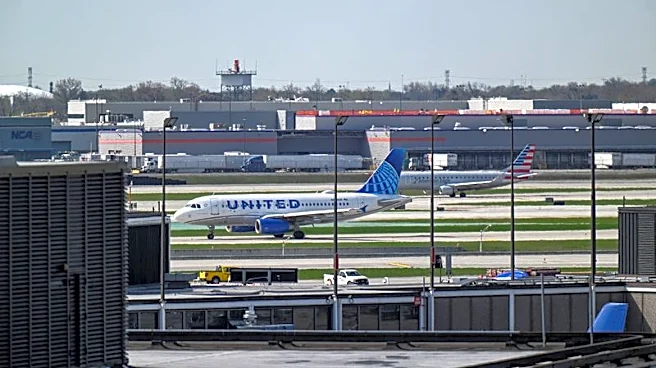
travelers with more reliable flight schedules. O'Hare, known for having the highest number of flights among U.S. airports, has been struggling with delays, exacerbated by planned expansions from airlines like American and United. The federal order limits flights to a maximum of 2,708 per day, slightly above last summer's peak but below the planned 3,080 flights. The reduction is intended to ease congestion and improve the travel experience during the busy summer season.
Why It's Important?
The flight reductions at O'Hare are significant as they address the chronic issue of flight delays at one of the nation's busiest airports. This move is expected to enhance the reliability of air travel, benefiting both airlines and passengers by reducing the likelihood of cancellations and delays. For airlines, particularly American and United, this means adjusting their schedules to comply with the new limits, potentially impacting their operational strategies and revenue. For passengers, the changes promise a more predictable travel experience, which is crucial during the high-demand summer months. The decision underscores the importance of balancing airport capacity with demand to maintain efficient operations.
What's Next?
The flight limits will be in effect from May 17 to October 24. Airlines are currently reviewing the federal order to determine the specific flights that will be canceled. They will then notify affected customers. American Airlines anticipates cutting up to 40 flights per day, while United may need to reduce over 200 flights. Both airlines have expressed support for the government's decision, recognizing its potential to improve airport operations. As the summer travel season approaches, stakeholders will be closely monitoring the impact of these changes on airport efficiency and passenger satisfaction.