








What's Happening?
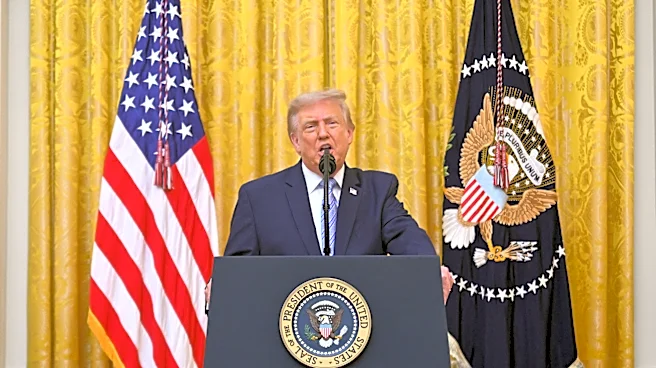
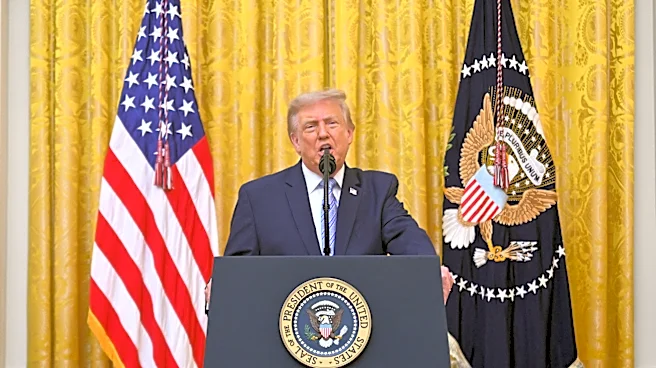
President Trump has made unverified claims accusing China of interfering in the 2020 U.S. election. In a televised address, he expressed doubts about the integrity of the U.S. electoral process, describing it as vulnerable to foreign interference. The
speech, which lasted 25 minutes, was not universally broadcasted, with major networks like CNN, ABC, and NBC opting not to air it live. Trump's allegations have been criticized by Democrats as an attempt to sow confusion and lay the groundwork for challenging the results of upcoming midterm elections. The address is seen as part of a broader strategy to undermine confidence in the electoral system without providing concrete evidence.
Why It's Important?
The allegations made by President Trump have significant implications for U.S. politics and public trust in the electoral process. By casting doubt on the integrity of elections, there is a risk of eroding public confidence in democratic institutions. This could lead to increased polarization and skepticism among voters, potentially affecting voter turnout and the perceived legitimacy of election outcomes. The situation also highlights the ongoing tensions between the U.S. and China, with accusations of interference adding to the geopolitical strain. The response from political leaders and the media's handling of such claims will be crucial in shaping public perception and maintaining electoral integrity.
What's Next?
As the midterm elections approach, it is likely that the discourse around electoral integrity will intensify. Political leaders and institutions may need to address these claims to reassure the public and ensure a fair electoral process. The potential for legal challenges and increased scrutiny of election procedures could arise, with both domestic and international observers closely monitoring the situation. The administration's actions and rhetoric in the coming months will be pivotal in determining the impact of these allegations on the political landscape.