


What's Happening?
Architectural researchers Rua Alshaheen and Reem Alissa have developed a conceptual framework, the Biophilic Architecture Integration Model, to guide spatial design for extreme artificial habitats, particularly in space. Published in 'City, Territory
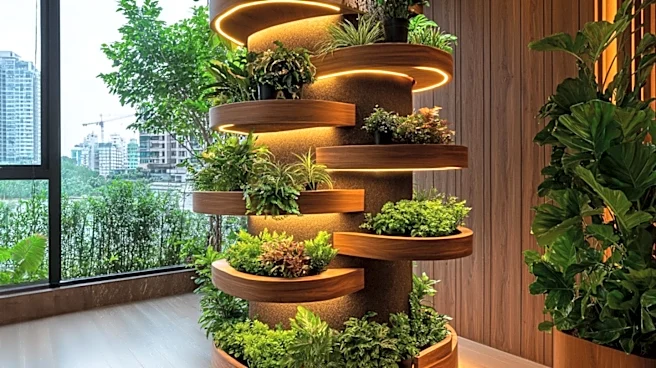
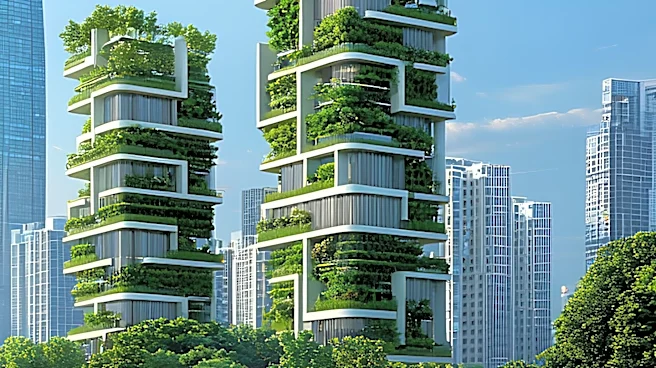
and Architecture,' their study addresses the lack of frameworks for integrating biological connections into enclosed synthetic environments as commercial space tourism and extraterrestrial settlement advance. The researchers conducted a two-phase investigation, combining cinematic spatial analysis of the 2016 science fiction film 'Passengers' with contemporary architectural theory. They evaluated spacecraft interiors depicted in speculative science fiction alongside peer-reviewed terrestrial biophilic systems to demonstrate how simulated natural cues, organic geometries, and intentional spatial sequencing can support human physiological equilibrium and mental resilience in isolated extraterrestrial structures. The model incorporates twenty refined attributes across three approaches: Artificial Nature, Representational Nature, and Spatial Nature, adapting biophilic principles for environments where direct contact with terrestrial ecology is impossible.
Why It's Important?
This research is crucial for the future of human space exploration and long-duration missions, as it addresses the psychological and physiological well-being of individuals in isolated, artificial environments. The biophilia hypothesis posits that humans have an innate affinity for living systems, and its application in space habitats could mitigate issues like chronic sleep disturbances, depressive symptoms, and claustrophobic anxiety associated with prolonged confinement. By systematically adapting natural elements into engineered lifelines, the framework aims to create more habitable and sustainable extraterrestrial living spaces. This could significantly impact the success and feasibility of future space tourism and settlement initiatives, ensuring that human health and comfort are prioritized alongside technical advancements. The study also highlights the role of speculative media, like science fiction films, as experimental platforms for architectural design and problem-solving in extreme conditions.
What's Next?
The Biophilic Architecture Integration Model is presented as an adaptable baseline, suggesting that future extraterrestrial frameworks will need to remain responsive to evolving mission constraints and technological capabilities. The researchers emphasize that architects must expand their professional scope to include speculative media, virtual simulations, and advanced aerospace planning. This implies a continued interdisciplinary approach, where insights from environmental psychology, biology, and engineering will be integrated into architectural design for space. Future developments could involve refining the model with more active ecological tasks, incorporating auditory and olfactory natural stimuli, and integrating visible ecological processes rather than relying solely on simulated or invisible green technologies. The ongoing development of space tourism and extraterrestrial settlements will likely drive further research and practical applications of this framework.
Beyond the Headlines
The study delves into the deeper implications of human connection to nature, even in the most artificial settings. It raises ethical considerations about the responsibility of designers to create environments that support not just physical survival but also mental and emotional well-being in extreme conditions. The use of cinematic architecture as a testing ground for design concepts highlights the cultural impact of science fiction in shaping future realities and technological advancements. This research could also influence terrestrial architecture, particularly in designing highly controlled or isolated environments, such as submarines, remote research stations, or even urban spaces with limited natural exposure. The emphasis on 'mutualistic cohabitation with living flora and fauna' underscores a long-term shift towards integrating ecological systems more deeply into human habitats, both on Earth and beyond.