
What's Happening?
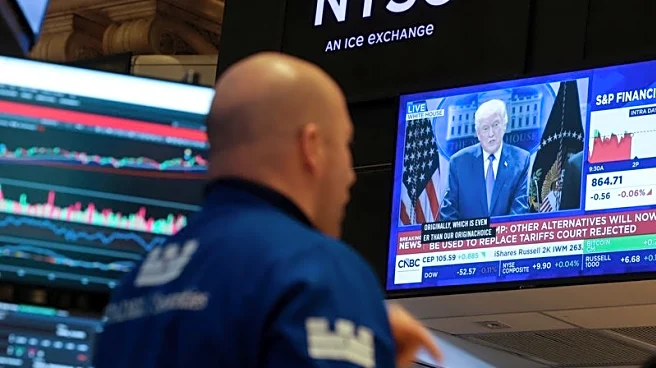
The European Union has paused the ratification of a trade deal with the United States following President Trump's announcement of a new 15% global tariff on imports. This decision comes after the U.S. Supreme Court invalidated Trump's use of emergency
powers to set new import taxes, prompting him to employ another section of trade law to justify the tariffs. The European Parliament's trade committee has postponed a vote on the agreement, seeking clarity on how these tariffs will affect the previously negotiated deal, which included a 15% cap on tariffs for most European goods and zero tariffs on U.S. industrial goods. The new tariff rate, set to take effect, would exceed the agreed ceiling, causing concern among EU officials. The situation has also raised questions about other bilateral trade agreements with countries like Brazil, India, and Britain.
Why It's Important?
The imposition of a 15% global tariff by President Trump has significant implications for international trade relations and economic stability. For the EU, the uncertainty surrounding the trade deal could disrupt economic planning and potentially lead to a recession, as businesses face increased costs and uncertainty. In the U.S., the tariffs could lead to higher prices for consumers and businesses, impacting economic growth. The move also challenges existing bilateral agreements, potentially leading to renegotiations or trade disputes. The situation underscores the volatility in U.S. trade policy, which could have long-term effects on global trade dynamics and economic partnerships.
What's Next?
The EU is awaiting a clear response from the U.S. on how it plans to honor the existing trade agreement. Meanwhile, President Trump may seek alternative legal avenues to maintain the tariffs beyond the initial 150-day period allowed under the current law. This period of uncertainty could lead to further negotiations or legal challenges. Stakeholders, including businesses and political leaders, will likely monitor the situation closely, as any changes could have widespread economic repercussions. The outcome of these developments will be crucial in shaping future U.S.-EU trade relations and the broader global trade landscape.