






What's Happening?
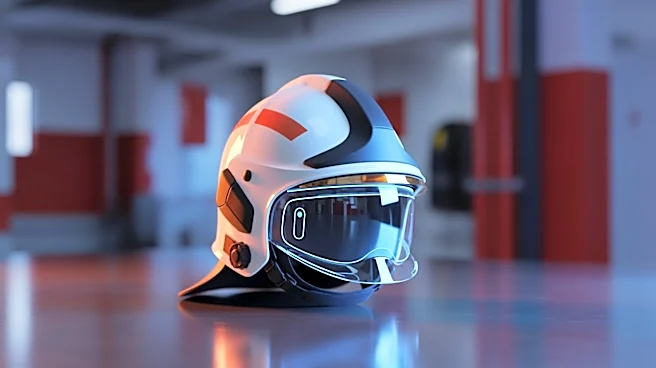
The Carmel Fire Department recently demonstrated the Qwake C-THRU helmets, which incorporate augmented reality (AR) technology to enhance situational awareness during rescue operations. The demonstration, held in April 2026, showcased the helmet's ability
to significantly reduce search times in low-visibility conditions by overlaying thermal outlines and live communication feeds. The initiative is partially funded by a $200,000 donation from the Heroes Club of Carmel and a $10 million development contract from the Department of Homeland Security (DHS). While some fire chiefs praise the technology for its potential to improve rescue efficiency, others express concerns about the risks of dependency on technology, potential battery failures, and the cognitive load on users. The debate centers on whether to prioritize rapid deployment or to conduct more rigorous safety testing before widespread adoption.
Why It's Important?
The introduction of AR helmets in firefighting represents a significant technological advancement with the potential to transform emergency response operations. By enhancing visibility and communication, these helmets could improve the safety and effectiveness of rescue missions. However, the concerns raised highlight the need for careful consideration of the technology's reliability and the training required for its effective use. The outcome of this debate could influence public safety policies and the future integration of AR technology in emergency services across the U.S. The decision to adopt such technology could lead to a patchwork of standards unless national guidelines are established, impacting the consistency and safety of firefighting operations nationwide.
What's Next?
The Carmel Fire Department plans to pilot the AR helmets this summer through controlled live burns and training drills. This phased approach allows for the assessment of the technology's performance and the identification of any potential issues before a broader rollout. The results of these trials will likely inform future decisions on the adoption of AR technology in firefighting. Additionally, the development of national standards and certification processes for AR in life-saving applications will be crucial to ensure safety and interoperability across different departments.
Beyond the Headlines
The broader implications of integrating AR technology into firefighting extend beyond immediate operational benefits. The successful implementation of such technology could pave the way for its adoption in other emergency services, potentially revolutionizing how first responders operate. However, it also raises ethical and legal questions about the reliance on technology in critical situations and the responsibility for failures. The development of comprehensive training programs and robust safety protocols will be essential to address these concerns and ensure that the technology enhances rather than hinders emergency response efforts.