





What's Happening?
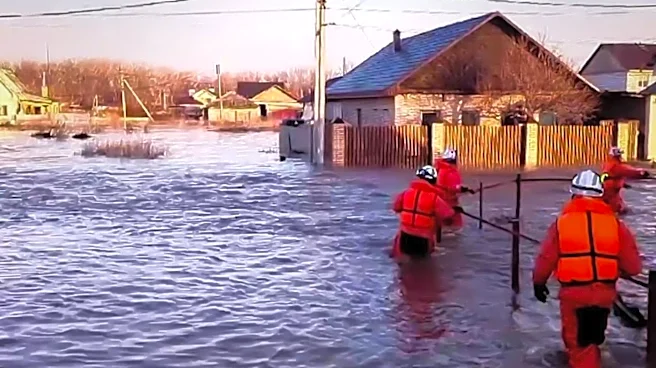
Two individuals, reportedly homeless, were rescued from a tunnel in San Bernardino, California, after being trapped by rising floodwaters. San Bernardino County Fire crews responded to a swiftwater rescue call on the 6900 block of Fairfax Drive on Sunday
morning. An adult 911 caller reported being caught in the floodwaters. Rescuers found two people in a tunnel connected to the main flood channel. A helicopter extraction was deemed impossible due to power lines crossing the channel at narrow intervals. Instead, a ladder truck was used to provide access for swiftwater rescuers, who then removed the victims one at a time. The fire department stated that the San Bernardino Sheriff's Office Aviation Unit had previously flown over the flood channels, warning residents of the impending storm and advising them to seek higher ground. One of the rescued individuals admitted hearing these announcements but believed the tunnel would be safe, having used it for shelter during previous storms. Both individuals denied injuries and declined medical evaluation or transport to a hospital.
Why It's Important?
This incident highlights the significant risks faced by vulnerable populations, particularly the homeless, during severe weather events. The reliance on flood channels and tunnels for shelter, despite warnings, underscores a critical public safety challenge in areas prone to flooding. The decision to use a ladder truck instead of a helicopter due to power line interference also points to the complexities and limitations faced by emergency services during rescues in urban or semi-urban environments. The event serves as a stark reminder of the need for effective outreach and alternative shelter solutions for homeless individuals, especially as climate change may lead to more frequent and intense weather phenomena. It also emphasizes the importance of clear communication and accessible resources to ensure that warnings reach and are heeded by all segments of the population, ultimately preventing potentially fatal outcomes.
What's Next?
Following this rescue, authorities may re-evaluate their strategies for warning and assisting vulnerable populations, particularly the homeless, in flood-prone areas. This could involve enhanced outreach programs, the establishment of more accessible and safe shelters during severe weather, and clearer communication methods to ensure warnings are understood and acted upon. Emergency services might also review their rescue protocols for challenging environments, such as tunnels with overhead obstructions, to optimize future operations. There could be discussions about infrastructure improvements to mitigate flood risks in these channels or to make them less accessible as makeshift shelters. Additionally, community organizations and local government agencies may increase efforts to provide long-term housing solutions and support services to reduce homelessness, thereby decreasing the number of individuals forced to seek shelter in dangerous locations during storms.
Beyond the Headlines
The incident in San Bernardino sheds light on the broader societal issue of homelessness and its intersection with environmental hazards. The fact that individuals sought shelter in a flood channel tunnel, despite warnings, speaks to a lack of safe and viable alternatives. This situation underscores the systemic challenges in addressing homelessness, where individuals often face a choice between unsafe temporary shelter and exposure to the elements. It also raises ethical questions about the responsibility of local governments and communities to protect all residents, especially those without stable housing, from natural disasters. The repeated use of the tunnel for shelter suggests a pattern of vulnerability that requires more than just immediate rescue efforts; it demands a comprehensive approach to housing, social support, and disaster preparedness that specifically addresses the needs of the homeless population. The event serves as a poignant illustration of how societal inequalities can exacerbate the impact of environmental risks.