



What's Happening?
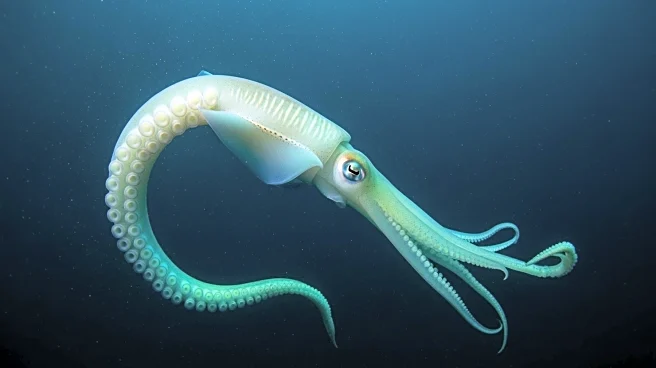
Marine creatures are known for their impressive tentacles, with some species having tentacles that reach extraordinary lengths. The lion's mane jellyfish holds the record for the longest tentacles, which can extend up to 30 meters. Other notable species include
the giant squid, whose tentacles can reach up to 10 meters, and the colossal squid, known for its massive size and unique rotating hooks on its tentacles. These tentacles serve various purposes, such as capturing prey and providing sensory information. The study of these creatures offers insights into the adaptations and survival strategies of deep-sea life.
Why It's Important?
Understanding the adaptations of marine creatures with long tentacles is crucial for marine biology and ecology. These adaptations allow them to thrive in the deep sea, a challenging environment with limited resources. The study of these species can inform conservation efforts, as many of these creatures are affected by human activities such as fishing and pollution. Additionally, their unique features can inspire technological innovations, such as biomimicry in robotics and materials science. Highlighting the diversity and complexity of marine life underscores the importance of preserving ocean ecosystems.