









What's Happening?
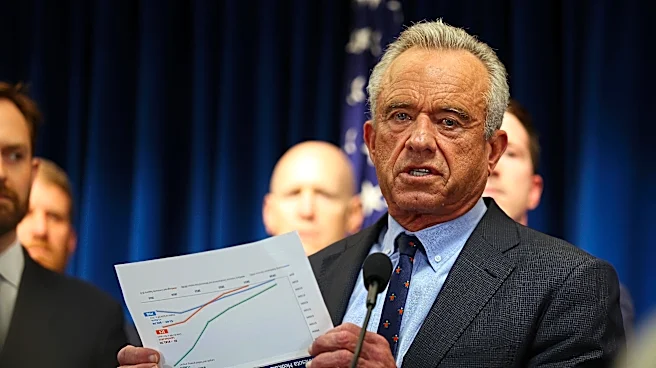
Robert F. Kennedy Jr., the health secretary, has been actively promoting a beef-centric diet as part of a new food pyramid initiative. This campaign is rooted in the idea that modern humans should emulate the dietary habits of prehistoric ancestors, a concept
popularized by the Paleo diet. The Department of Health and Human Services released a report supporting this dietary shift, citing benefits of consuming wild game and advocating for a return to a 'hunter-gatherer' lifestyle. This approach traces back to the 1970s when Walter Voegtlin introduced the Stone Age Diet, emphasizing a meat-heavy diet. Despite historical evidence suggesting a more varied ancient diet, Kennedy's campaign continues to push for increased beef consumption, aligning with a nostalgic view of American dietary traditions.
Why It's Important?
The promotion of a beef-heavy diet by a government official like Robert F. Kennedy Jr. has significant implications for public health and the agricultural industry. It could influence dietary guidelines and consumer behavior, potentially increasing demand for beef and impacting livestock farming practices. This shift may also affect environmental policies, given the ecological footprint of beef production. Additionally, the campaign reflects broader cultural and political narratives, tapping into American nostalgia for traditional diets and lifestyles. The emphasis on beef aligns with a romanticized view of the American West and its cowboy culture, which could resonate with certain demographic groups while sparking debate over sustainable and ethical food practices.
What's Next?
As the campaign for a beef-centric diet continues, it is likely to face scrutiny from health experts and environmentalists concerned about the implications of increased beef consumption. The Department of Health and Human Services may need to address these concerns and provide further scientific evidence to support their dietary recommendations. Additionally, the agricultural sector might experience shifts in production practices to meet potential changes in consumer demand. Public discourse around sustainable and ethical eating practices could intensify, prompting discussions on alternative protein sources and the environmental impact of traditional livestock farming.
Beyond the Headlines
The advocacy for a beef-heavy diet raises questions about the intersection of dietary guidelines, cultural identity, and environmental sustainability. It highlights the tension between traditional dietary practices and modern health and environmental concerns. The campaign's reliance on a nostalgic view of American dietary history may overlook the complexities of contemporary food systems and the need for diverse, sustainable food sources. This development could also influence global perceptions of American dietary practices, potentially affecting international trade and agricultural policies.