





What's Happening?
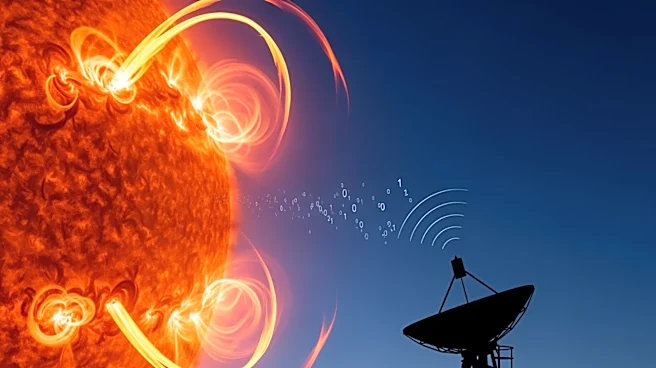
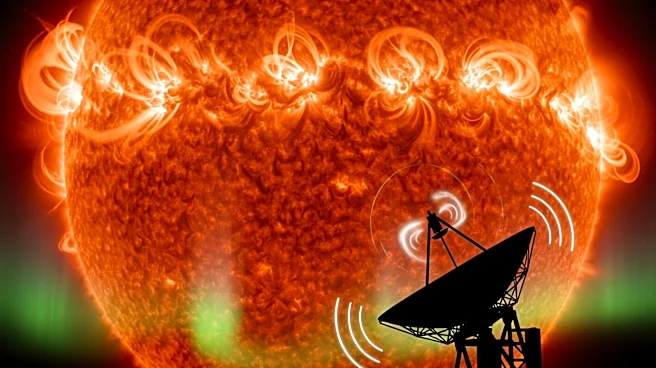
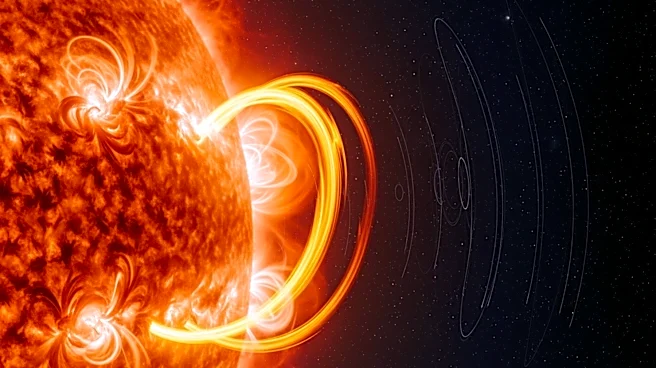
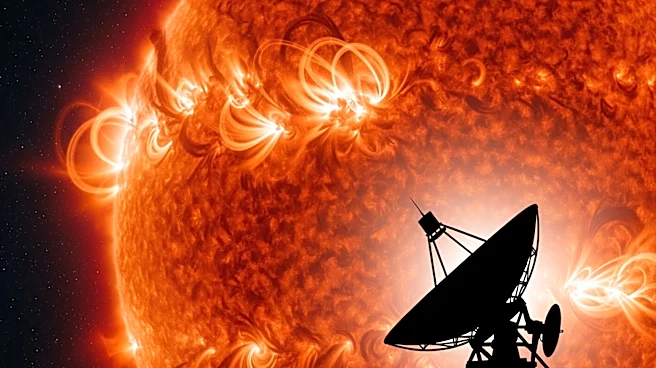
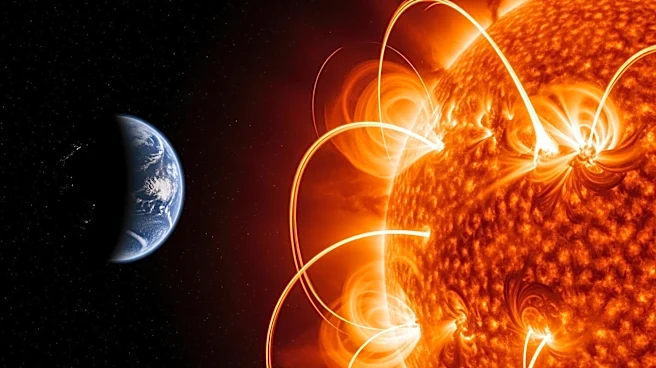
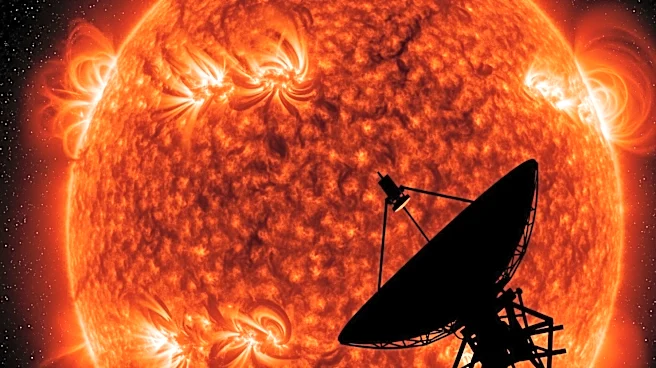
NASA has reported two significant solar flares, classified as X2.4 and X2.5, which occurred within a span of seven hours on April 24, 2026. These flares, originating from sunspot region AR4419, disrupted radio communications across the Pacific Ocean and East
Asia. The radiation from these flares traveled to Earth at the speed of light, affecting the ionosphere, which is crucial for carrying radio and navigation signals. As a result, pilots and sailors experienced communication blackouts lasting up to an hour. Despite the disruptions, commercial flights were not diverted due to satellite backup systems. The solar activity is part of the peak of Solar Cycle 25, which began in December 2019.
Why It's Important?
The solar flares highlight the vulnerability of global communication systems to solar activity. The incident underscores the reliance on atmospheric layers for radio and navigation signals, which can be disrupted by solar flares. This event serves as a reminder of the potential risks posed by solar storms, which could have catastrophic impacts on modern infrastructure, including power grids, GPS systems, and telecommunications. The economic implications are significant, with potential damages from a major solar storm estimated to reach trillions of dollars. The event emphasizes the need for continuous monitoring and preparedness to mitigate the effects of future solar activity.
What's Next?
Agencies like NOAA and NASA continue to monitor solar activity to anticipate and mitigate potential disruptions. The peak of Solar Cycle 25 is expected to continue until 2027, suggesting that further solar flares could occur. This ongoing solar activity necessitates the development of more robust backup systems and contingency plans to protect critical infrastructure. The incident may prompt increased investment in technologies to shield against solar-induced disruptions and enhance the resilience of communication and power systems.