



What's Happening?
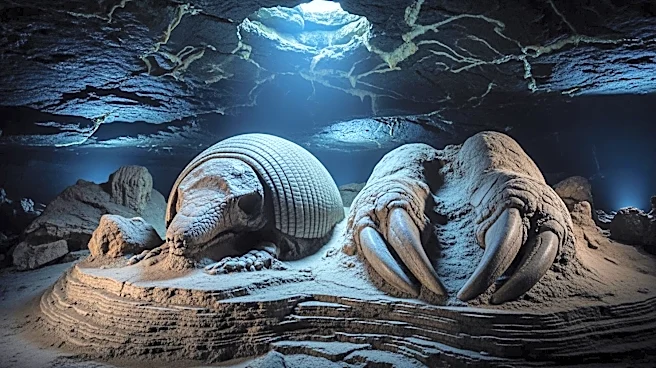
Researchers exploring a cave in central Texas have uncovered a significant ice-age ecosystem, including fossils of a giant tortoise and a lion-sized armadillo relative. The discovery was made in Bender's Cave, near San Antonio, by John Moretti, a vertebrate
paleontologist at the University of Texas at Austin, and local caver John Young. The cave, which is difficult to access due to a subterranean stream, had been largely ignored by paleontologists until now. Over several trips between 2023 and 2024, the team collected fossils from 21 areas within the cave, including remains of a giant sloth, mammoth teeth, and camelid bones. The most intriguing finds were fossils of a pampathere, a giant armadillo relative, and an extinct genus of giant tortoise. These discoveries suggest the presence of a warmer interglacial period in Texas' history, as these species were not previously known to inhabit the region.
Why It's Important?
The discovery of these fossils provides a rare glimpse into an ancient ecosystem that was previously missing from central Texas' fossil record. It challenges existing understandings of the region's climate and biodiversity during the last ice age. The presence of species like the pampathere and giant tortoise indicates that the area may have experienced warmer conditions than previously thought, allowing these animals to thrive. This finding could lead to a reevaluation of the climatic history of the region and contribute to broader discussions on climate change and its impact on biodiversity. Additionally, the discovery highlights the potential for further paleontological research in overlooked areas, which could yield more insights into past ecosystems and their responses to climate shifts.
What's Next?
The research team is working to date the fossils more accurately by analyzing the calcite crusts that formed on the bones after they were deposited in the cave. This method could provide a minimum age for the fossils, helping to confirm whether they represent a warmer interglacial period. Further studies may also explore the cave's potential to reveal more about the region's prehistoric climate and ecosystems. The findings could prompt additional exploration of similar sites in Texas and beyond, potentially uncovering more about the distribution and adaptation of species during the ice age.