





What's Happening?
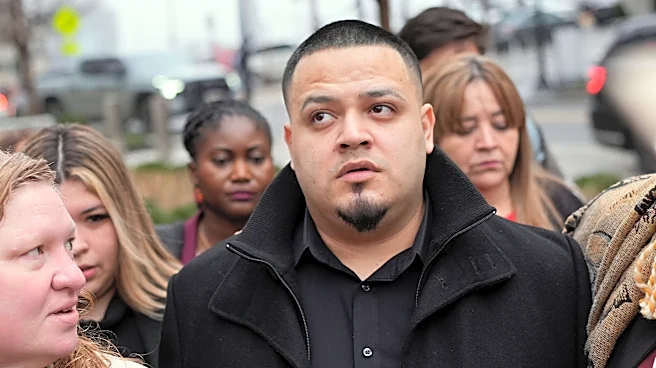
A federal judge has sentenced William Stanley to one year of probation after he was found guilty of obstructing entrances and disrupting work at the U.S. Immigration and Customs Enforcement (ICE) office in Charlotte. Stanley was arrested during the 'Operation
Charlotte’s Web' immigration crackdown last November. In addition to probation, Stanley is required to complete 50 hours of community service and pay a $1,000 fine. The sentencing date for Heather Morrow, who was also convicted in the same case, has not yet been determined.
Why It's Important?
This sentencing is significant as it reflects the legal consequences for individuals involved in protests that lead to obstruction of federal facilities. It underscores the balance between the right to protest and the legal boundaries that govern such demonstrations, particularly when they interfere with government operations. The outcome of this case could serve as a precedent or reference point for future protest-related arrests and prosecutions, influencing how activists approach demonstrations and how law enforcement responds. For those advocating for immigration reform, this ruling highlights the risks associated with direct action, while for government agencies, it reinforces the legal framework for maintaining order and access to federal buildings.
What's Next?
William Stanley will now begin his one-year probation period, during which he must adhere to the terms set by the federal judge, including completing community service and paying the fine. The next immediate development will be the setting of a sentencing date for Heather Morrow, who was also found guilty in the same case. Her sentencing could potentially follow a similar pattern or introduce different conditions based on the specifics of her involvement. This case may also lead to further discussions or legal challenges regarding the interpretation of protest rights versus public order, especially in the context of immigration enforcement.
Beyond the Headlines
The sentencing of William Stanley in the ICE protest case extends beyond the immediate legal outcome, touching upon broader societal debates regarding civil disobedience and the role of activism in a democratic society. While the court has affirmed the illegality of obstructing federal operations, the underlying issues that fuel such protests—like immigration policies and enforcement practices—remain contentious. This case highlights the tension between citizens' desire to express dissent and the state's imperative to maintain order and functionality. It also brings into focus the varying judicial responses to protest-related offenses, which can range from lenient to severe, often reflecting the specific circumstances of the protest and the discretion of the presiding judge. The community service and fine components of the sentence suggest a punitive yet rehabilitative approach, aiming to deter future similar actions while acknowledging the non-violent nature of the offense.