






What's Happening?
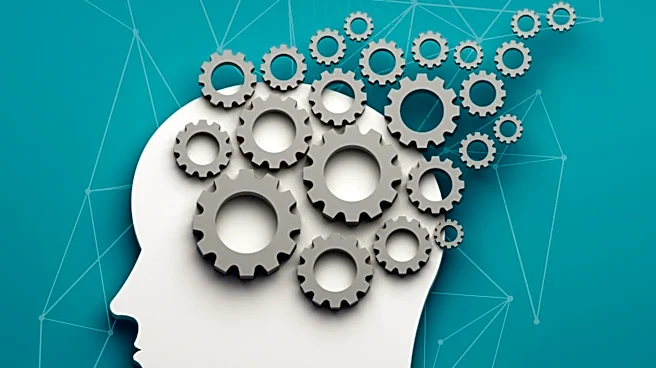
Cognitive psychology, a field focused on understanding internal mental processes, is shedding light on how the mind handles attention, memory, language, and decision-making. This discipline informs evidence-based treatments like cognitive behavioral therapy
(CBT), helping therapists address distorted thinking patterns. Cognitive psychology differs from cognitive neuroscience by focusing on mental processes rather than specific brain structures. Researchers use behavioral experiments and brain imaging tools like fMRI and EEG to study these processes. The field has evolved from behaviorism, which ignored internal mental states, to a comprehensive approach that models the mind's information-processing capabilities.
Why It's Important?
Cognitive psychology's insights are crucial for developing effective therapeutic interventions. By understanding how attention, memory, and perception work, therapists can better address issues like depression and anxiety. The field's emphasis on reconstructive memory and cognitive biases also informs strategies for improving decision-making and problem-solving. As cognitive psychology continues to integrate findings from neuroscience and artificial intelligence, it offers a more nuanced understanding of human cognition, which can enhance educational practices and clinical treatments.
What's Next?
Future research in cognitive psychology will likely focus on refining models of mental processes and exploring their applications in various domains. As technology advances, new tools for measuring brain activity and behavior will provide deeper insights into cognition. This could lead to more personalized therapeutic approaches and improved educational methods. The ongoing integration of cognitive psychology with other scientific disciplines promises to expand our understanding of the mind and its capabilities.