



What's Happening?
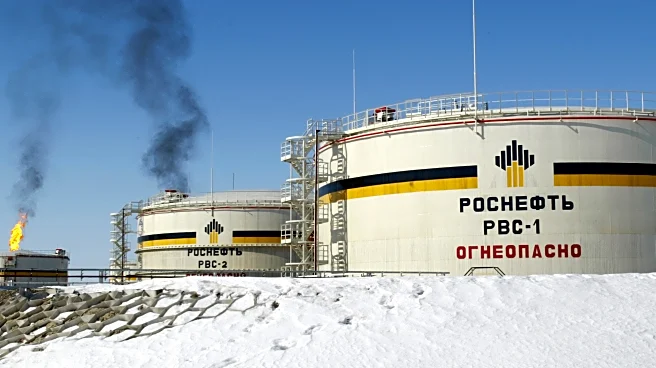
President Trump has approved a sanctions bill aimed at economically crippling Russia in response to its military actions in Ukraine. The bill, primarily authored by Sen. Lindsey Graham and Sen. Richard Blumenthal, allows for tariffs and secondary sanctions on countries
purchasing Russian oil, gas, and other exports. This move is intended to cut off financial support for Russia's military activities. The White House has previously sought revisions to the sanctions package, but a White House official confirmed Trump's support for the legislation. The bill has significant backing in the Senate and a companion bill in the House.
Why It's Important?
The sanctions bill represents a strategic effort by the U.S. to exert economic pressure on Russia, aiming to deter its military aggression in Ukraine. By targeting Russia's energy exports, the bill seeks to undermine a critical source of revenue for the Russian government. This legislative action could have far-reaching implications for international relations, potentially affecting global energy markets and diplomatic efforts to resolve the conflict. The U.S. stance may influence other countries' policies towards Russia, impacting global geopolitical dynamics and the balance of power.
What's Next?
The Senate may vote on the sanctions bill as early as next week, although the timing is uncertain due to other legislative priorities. The Trump administration continues to negotiate a peace deal to end the conflict in Ukraine, with special envoy Steve Witkoff and Jared Kushner leading the efforts. The outcome of these negotiations and the implementation of the sanctions could significantly impact the future of U.S.-Russia relations and the broader geopolitical landscape.