



What's Happening?
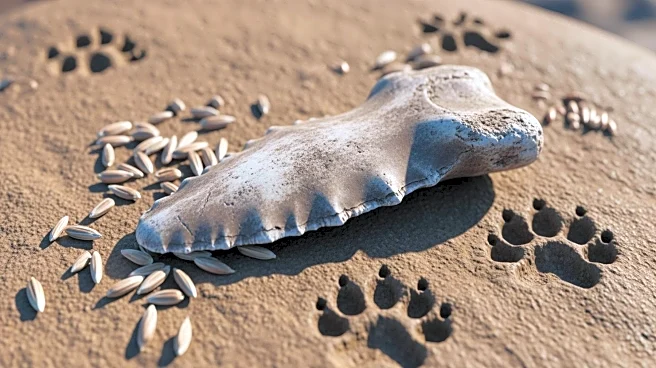
Recent research has revealed that dogs were domesticated by humans before the advent of agriculture. Genetic evidence from ancient canine specimens shows that dogs existed during the Paleolithic period, around 14,000 years ago. This discovery was made
through the analysis of DNA from ancient dog remains found at archaeological sites across Europe and Western Asia. The studies indicate that early human societies exchanged dogs or acquired them from one another, suggesting a widespread domestication process.
Why It's Important?
This finding is significant as it reshapes the understanding of human-animal relationships and the timeline of domestication. The domestication of dogs before farming suggests that early humans valued dogs for their companionship and utility in hunting and protection. This relationship likely played a crucial role in the development of human societies, influencing social structures and survival strategies. The research also highlights the genetic legacy of these early dogs, which continues to influence modern canine breeds.