
What's Happening?
On January 10, 2026, Minnesota Representatives Ilhan Omar, Angie Craig, and Kelly Morrison were denied entry to an Immigration and Customs Enforcement (ICE) detention facility in Minneapolis. The lawmakers,
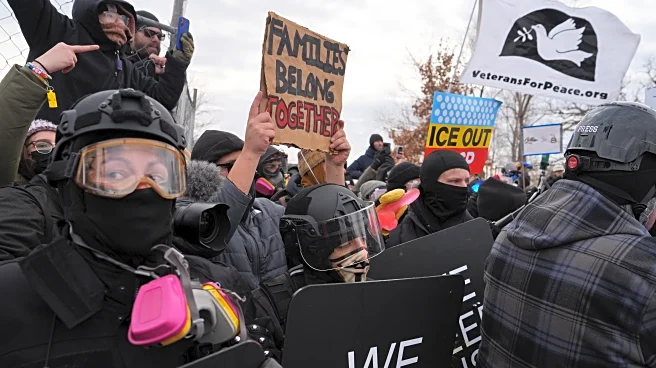
who were initially allowed inside, were abruptly asked to leave the premises. The incident occurred at the Whipple Building, where the representatives were attempting to conduct oversight of the facility. According to Rep. Omar, the officials cited a message that rescinded their invitation and denied further access. This event is part of ongoing tensions between Minnesota lawmakers and the Trump administration's immigration enforcement policies. The lawmakers were joined by activists and photographers, and the situation escalated with federal agents forming a line to block entry. The incident has sparked protests, with nearly a dozen protesters arrested at the facility earlier in the week.
Why It's Important?
This incident highlights the ongoing conflict between state lawmakers and federal immigration policies under the Trump administration. The denial of entry to elected officials raises questions about transparency and accountability in federal detention facilities. Lawmakers argue that they have a constitutional responsibility to oversee such facilities, which are often criticized for their treatment of detainees. The event underscores the broader national debate on immigration enforcement and the rights of lawmakers to access and inspect government operations. The situation could influence public opinion and policy discussions on immigration, potentially affecting future legislative actions and electoral outcomes.
What's Next?
The incident is likely to prompt further scrutiny and debate over the access rights of lawmakers to federal facilities. It may lead to legal challenges or legislative efforts to ensure transparency and oversight in immigration enforcement. The response from the Trump administration and ICE could shape future interactions between federal agencies and state representatives. Additionally, the protests and public outcry may continue, potentially influencing policy changes or reforms in immigration practices. Stakeholders, including civil rights organizations and immigrant advocacy groups, are expected to increase pressure on the government for greater accountability.