
What's Happening?
Ukraine has intensified its military operations against Russian oil infrastructure, significantly impacting Russia's oil export revenues. According to the International Energy Agency (IEA), Russia's oil export revenues fell
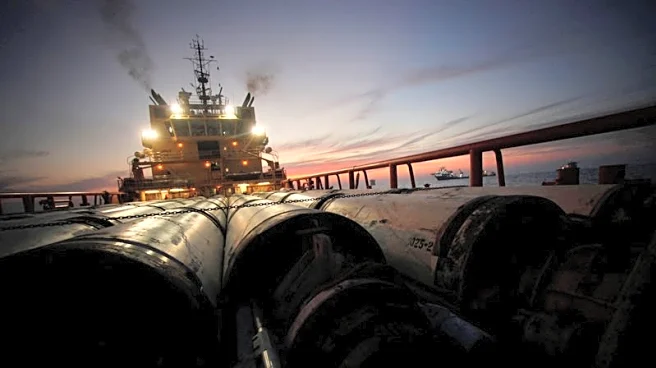
to their lowest monthly level since the onset of its full-scale invasion of Ukraine. In November, Russia's total oil revenue was reported at $11 billion, marking a $3.6 billion decrease compared to the previous year. This decline is attributed to Ukrainian attacks on Russian oil refineries and international sanctions. Ukrainian forces have targeted Russia's 'shadow fleet' and offshore oil facilities, resulting in a nearly 50% reduction in Russian oil exports through the Black Sea. Additionally, Ukrainian naval drones have posed a threat to Russia's oil export routes, forcing Moscow to reconsider its defensive strategies.
Why It's Important?
The decline in Russian oil export revenues underscores the effectiveness of Ukraine's military strategy and international sanctions in weakening Russia's economic capabilities. This development has significant implications for the global energy market, as Russia is a major oil exporter. The reduction in Russian oil exports could lead to shifts in global oil prices and supply chains. Furthermore, the financial strain on Russia may impact its ability to sustain its military operations in Ukraine. The situation also highlights the strategic use of military technology, such as naval drones, in modern warfare, potentially influencing future military tactics and defense policies worldwide.
What's Next?
As Ukraine continues its offensive against Russian oil infrastructure, further disruptions in Russian oil exports are likely. This could prompt Russia to enhance its defensive measures or seek alternative export routes. The international community, particularly countries reliant on Russian oil, may need to adjust their energy strategies to mitigate potential supply shortages. Additionally, ongoing diplomatic efforts may intensify as stakeholders seek to resolve the conflict and stabilize the global energy market. The situation remains fluid, with potential for further escalation or diplomatic breakthroughs.