
What's Happening?
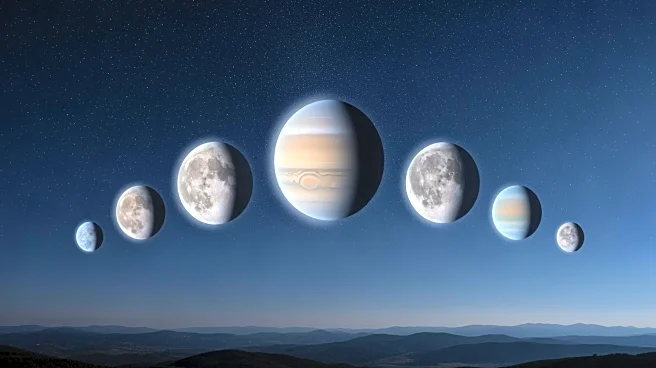
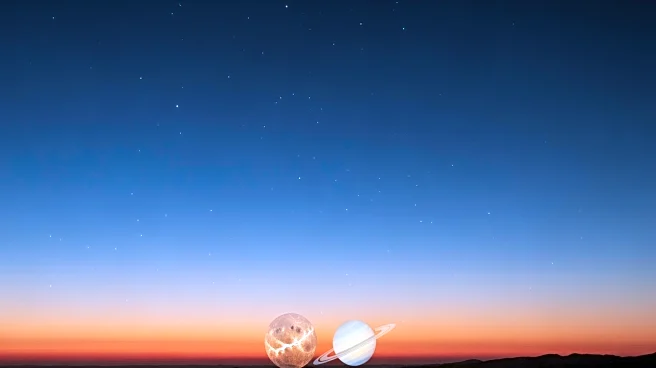
A rare astronomical event, known as a 'planetary parade,' is set to occur in late February, where six planets—Mercury, Venus, Jupiter, Saturn, Uranus, and Neptune—will align in the evening sky. This phenomenon allows observers to see these planets in a single
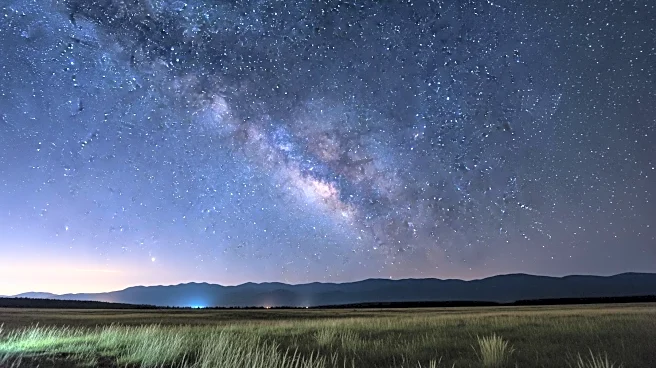
night, with Mercury, Venus, and Jupiter visible to the naked eye, while Uranus and Neptune require binoculars or a telescope. The best time to view this alignment is shortly after sunset, looking towards the western horizon. This event is notable for its rarity, as alignments involving six or more planets occur only every few decades. The alignment is not a true spatial alignment but rather a visual effect caused by the planets' shared orbital plane, known as the ecliptic, which compresses their positions into a line from Earth's perspective.
Why It's Important?
The six-planet alignment offers a unique opportunity for both amateur and professional astronomers to observe a significant portion of the solar system simultaneously. Such events can spark public interest in astronomy and provide educational opportunities about planetary movements and celestial mechanics. The alignment also highlights the importance of perspective in astronomical observations, as the planets are not physically aligned in space but appear so from Earth. This event underscores the vastness of the solar system and the intricate dance of celestial bodies within it, potentially inspiring future generations to explore space science.
What's Next?
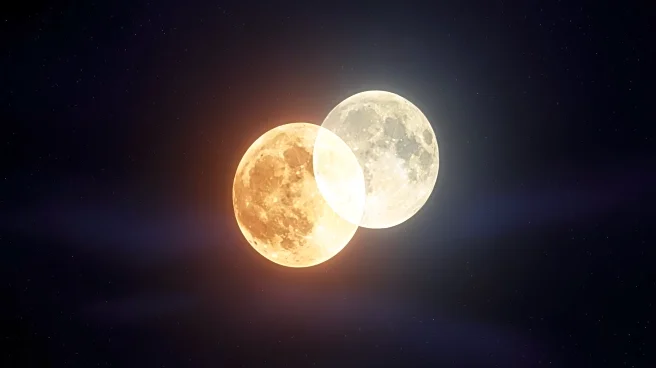
Following the planetary parade, a lunar eclipse is expected in early March, which may affect the visibility of some of the fainter planets due to the brightness of the nearly full moon. Observers are encouraged to find locations with minimal light pollution and clear horizons to maximize their viewing experience. The event may lead to increased public engagement with astronomy, prompting discussions and educational programs about the solar system and celestial events. Additionally, the alignment could inspire further research into planetary alignments and their historical significance in various cultures.
Beyond the Headlines
The planetary parade serves as a reminder of the interconnectedness of celestial events and their impact on human culture and understanding of the universe. Historically, such alignments have been interpreted as omens or significant events in various cultures, influencing mythology and astrology. In modern times, they offer a chance to reflect on humanity's place in the cosmos and the ongoing quest to explore and understand the universe. The event also highlights the challenges of light pollution and the importance of preserving dark skies for astronomical observations.