








What's Happening?
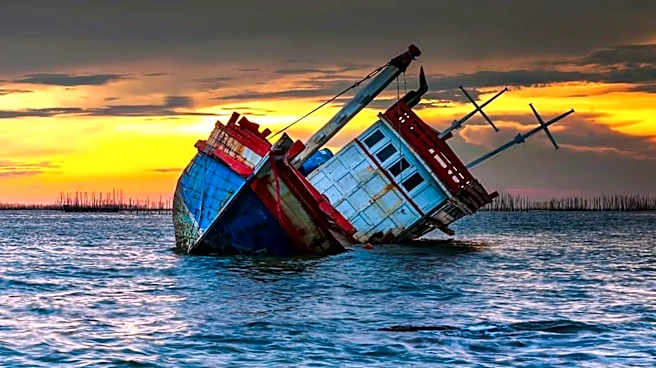
In Guyana, a ferry named MV Barima capsized over the weekend, leading to a search for survivors and a criminal investigation. The ferry, which was traveling from Georgetown to Port Kaituma, capsized off the Essequibo coast. The government has reported
that at least 35 of the 67 rescued individuals were not listed on the official manifest, raising concerns about the actual number of passengers on board. Prime Minister Mark Phillips indicated that the ferry was likely overloaded, and the captain, along with another crew member, tested positive for marijuana. The government is focusing its investigation on the accuracy of the passenger manifest, cargo loading procedures, and the conduct of the crew. Public Works Minister Juan Edghill expressed his devastation over the incident, which is considered the worst marine disaster in decades in Guyana.
Why It's Important?
The incident underscores significant safety and regulatory challenges in Guyana's maritime operations. The potential overloading of the ferry and the presence of unlisted passengers highlight systemic issues in passenger and cargo management. The government's response, including a criminal investigation, reflects the seriousness of the situation and the need for stringent enforcement of safety regulations. This event could lead to policy changes aimed at improving maritime safety and preventing similar tragedies. The economic implications are also notable, as ferries are a crucial mode of transportation in Guyana, especially in areas with limited road infrastructure. Ensuring the safety and reliability of these services is vital for the country's transportation network and economic stability.
What's Next?
The government is expected to conduct a thorough investigation to determine the causes of the ferry's capsizing and to hold accountable those responsible for any negligence or misconduct. This may involve revising safety protocols and enforcing stricter compliance measures for ferry operations. The investigation's findings could lead to legal actions against individuals found guilty of criminal wrongdoing. Additionally, there may be increased scrutiny on the practices of ferry operators and potential reforms in the management of passenger and cargo manifests. The outcome of this investigation could set a precedent for future maritime safety regulations in Guyana.
Beyond the Headlines
The ferry disaster highlights broader issues of governance and accountability in Guyana's public transportation sector. The alleged practice of unofficially selling seats and not listing passengers on the manifest points to potential corruption and a lack of oversight. Addressing these issues may require systemic reforms and increased transparency in the operations of state-run transportation services. The incident also raises questions about the maintenance and safety standards of older vessels, as the MV Barima was over 80 years old and due for repairs. This could prompt a reevaluation of the fleet's condition and the implementation of more rigorous maintenance schedules.