




What's Happening?
The European Organization for Nuclear Research (CERN) is transitioning more than 2,200 specialized computers from Red Hat Enterprise Linux (RHEL) to Debian. This significant move is driven by RHEL's evolving hardware requirements, which would render a substantial
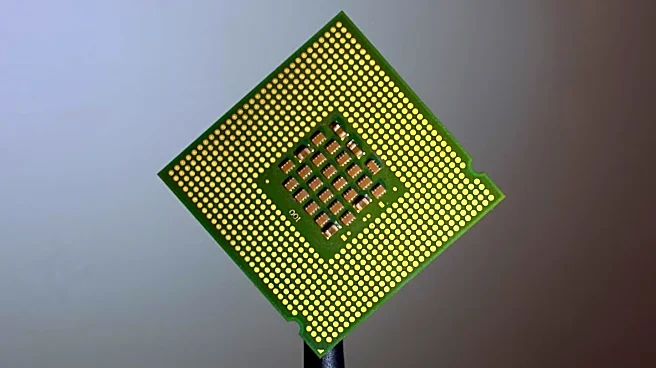
portion of CERN's older, specialized hardware obsolete. Specifically, newer RHEL releases, such as RHEL 9 and the upcoming RHEL 10, are built with compiler flags like "-march=x86-64-v2" and "x86-64-v3." These flags introduce architectural changes that break compatibility with 64-bit CPUs released before 2009 and 2015, respectively. CERN engineers estimate that this would force them to replace 47% of their embedded control computers for RHEL 9 and an additional 17% for RHEL 10. The decision to move to Debian 13 aims to avoid a massive IT replacement job and associated costs, as Debian offers broader compatibility with older hardware. CERN had previously used AlmaLinux, a free variant of RHEL, and considered CentOS Stream before deciding to abandon the RHEL infrastructure due to disruptive compiler changes.
Why It's Important?
This shift by CERN highlights a growing challenge for organizations relying on long-term hardware investments and specialized computing environments. Red Hat's strategic direction, influenced by its acquisition by IBM, towards newer hardware architectures through compiler optimizations, while beneficial for performance on modern systems, creates significant compatibility hurdles for institutions with extensive legacy infrastructure. For the broader open-source ecosystem, CERN's move underscores the importance of distributions like Debian, which prioritize stability and wider hardware support, offering a viable alternative for organizations facing similar upgrade dilemmas. This decision could influence other research institutions or enterprises with substantial investments in older, yet functional, hardware to re-evaluate their Linux distribution choices, potentially impacting Red Hat's market share in specialized computing sectors. It also emphasizes the economic implications of software evolution on hardware lifecycle management, forcing organizations to weigh the costs of hardware replacement against the benefits of newer software features.
What's Next?
CERN engineers are now embarking on the complex task of migrating their systems to Debian. This process involves significant challenges, as CERN utilizes numerous custom hardware solutions that require specific kernel drivers, bootloaders, and system images. Debian does not provide a standard toolset for automating package building and publishing, necessitating the evaluation of additional provisioning solutions like Debusine. The success of CERN's migration could serve as a case study for other large-scale organizations contemplating similar transitions. Furthermore, this move might prompt Red Hat to consider strategies for maintaining broader backward compatibility or offering more flexible support options for older hardware, especially for clients in scientific research or industrial control sectors. The open-source community will likely observe CERN's progress closely, as it could lead to increased development and tooling around Debian for specialized enterprise environments.
Beyond the Headlines
The decision by CERN to move away from RHEL due to hardware compatibility issues touches upon deeper implications regarding the balance between technological advancement and sustainability in large-scale computing. Forcing hardware upgrades due to software changes can lead to significant electronic waste and increased carbon footprints, contradicting broader environmental sustainability goals. CERN's choice to adopt Debian to extend the life of its existing hardware reflects a growing awareness of these environmental and economic costs. This situation also highlights the tension between commercial software development, which often prioritizes cutting-edge performance and newer hardware, and the needs of scientific research institutions that require long-term stability and cost-effectiveness. It underscores the value of community-driven open-source projects like Debian, which often maintain broader compatibility and offer more control over system configurations, aligning better with the specific, long-term requirements of specialized research environments.