






What's Happening?
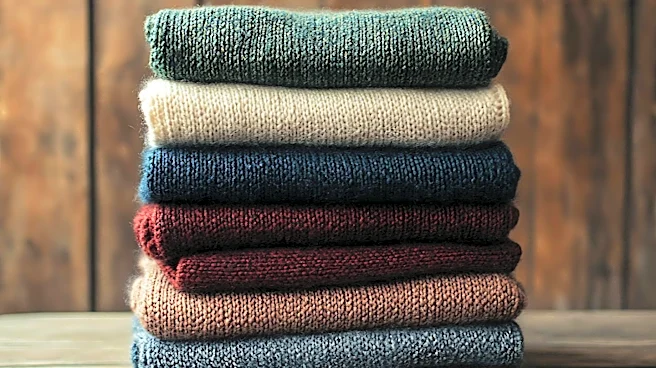
Montana State University has launched a new Wool Lab aimed at revitalizing the regional wool industry. The facility, managed by wool expert Brent Roeder, is located at the Fort Ellis Research and Teaching Farm. It provides agriculture students with hands-on
experience in raising high-quality sheep. The lab, which opened in July, is part of a broader effort to make wool production more efficient and profitable for Montana's sheep ranchers. The Wool Lab was funded by a combination of legislative appropriations and private donations, costing approximately $10 million. The initiative comes as the U.S. sheep herd has decreased by 90% over the last 80 years, with Montana's wool production dwindling by two-thirds in the past 30 years. The lab aims to innovate cheaper ways to produce and process wool, with a focus on breeding sheep that produce wool comfortable enough to be worn next to the skin.
Why It's Important?
The opening of the Wool Lab is significant as it addresses the decline of the wool industry in the U.S., which has been overshadowed by synthetic fibers. The lab's research and innovation could lead to a resurgence in wool production, providing economic benefits to Montana's sheep ranchers. By focusing on producing high-quality, next-to-skin wool, the lab could help local producers tap into niche markets that value natural fibers over synthetics. This initiative also highlights the environmental benefits of wool, as synthetic fabrics contribute to pollution and do not biodegrade. The lab's work could lead to increased profitability for ranchers, encouraging investment in facilities and equipment that have been neglected due to economic challenges.
What's Next?
The Wool Lab plans to continue its research and development efforts, with input from Montana ranchers who help guide the lab's direction. Every two years, sheep producers assess the lab's work, which could lead to further innovations in wool production. The lab's focus on breeding sheep for high-quality wool could expand the market for Montana's wool, potentially increasing demand and prices. As the lab gains momentum, it may attract more students and researchers interested in sustainable agriculture and natural fibers, further strengthening the regional wool industry.
Beyond the Headlines
The Wool Lab's efforts could have broader implications for the natural fiber industry, promoting sustainable practices and reducing reliance on synthetic materials. By educating the next generation of sheep ranchers, the lab is investing in the future of the wool industry, ensuring that traditional skills and knowledge are passed down. This initiative also highlights the cultural significance of wool production in Montana, preserving a way of life that has been part of the state's heritage for generations.